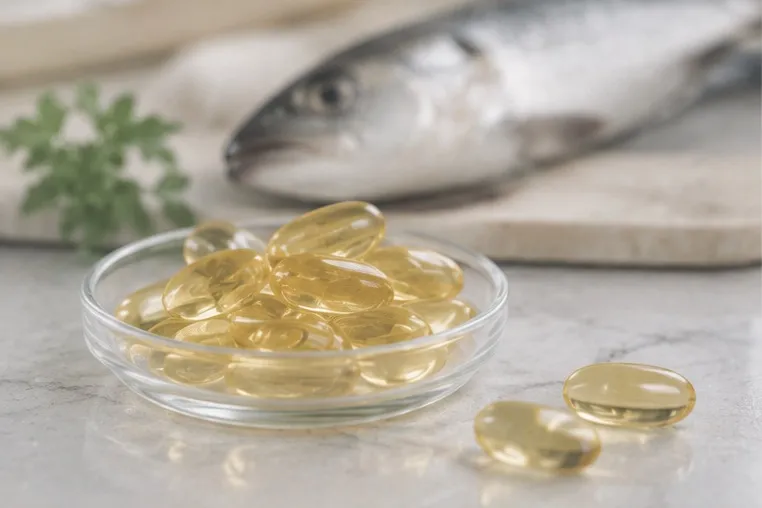
 The stability of a fish oil softgel depends on a complex interplay of factors. These include the initial quality of the raw oil, the concentration of omega-3 fatty acids (EPA and DHA), the antioxidant system used in formulation, the conditions under which the softgels are manufactured, and finally the packaging chosen for storage and distribution.
Conditions promoting the oxidation of PUFA — such as oxygen permeability, elevated temperature, light access, and iron and copper ions during processing — may impair the stability of encapsulated fish oil products. When any of these factors are poorly controlled, the result is a rancid, low-potency product. Understanding each factor is the first step toward producing and sourcing a truly high-quality deep sea fish oil softgel.
What Causes Fish Oil Oxidation in Softgels?
Oxidation is a chemical reaction between oil and oxygen. Polyunsaturated fats like omega-3s are especially vulnerable. The chain reaction follows a predictable path: oxygen contacts the oil, free radicals form, lipid peroxides develop, and eventually, breakdown products create an unpleasant odor and taste while potency drops.
Critically, oxidation does not wait for the product to reach a consumer's shelf. Exposure actually occurs during tank filling, pumping, at the die seam, and during the drying phase. If oxygen control is not tight, degradation begins before bottling.
Fish oil is prone to oxidation by reactive oxygen species, which leads to off-flavors. Furthermore, saturated oils and fats composed of saturated fatty acids are resistant to oxidation, whereas oils and fats become vulnerable to oxidation as the constituent fatty acids increase in the degree of unsaturation. This is precisely why deep sea fish oil softgels, which are rich in highly unsaturated EPA and DHA, demand such rigorous production standards.
The table below summarizes the primary triggers of fish oil oxidation:
Oxidation Trigger | Effect on Softgel Quality | Control Strategy |
Oxygen exposure | Lipid peroxide formation | Nitrogen blanketing |
Elevated temperature | Accelerated oxidation rate | Temperature-controlled storage |
Light (UV) exposure | Free radical initiation | Opaque/dark packaging |
Metal ions (Fe, Cu) | Pro-oxidant catalysis | Use of chelating agents |
Poor-quality raw material | Pre-existing rancidity | Incoming oil testing (PV, AV, TOTOX) |
How Do EPA and DHA Levels Affect Product Stability?
The concentration and chemical form of EPA and DHA in a fish oil softgel have a direct bearing on how stable the finished product is. And this is a nuance that many buyers miss.
The most important quality features of fish oil supplements are the concentration of omega-3 LC PUFA and stability against oxidation. These two qualities are deeply interconnected. The higher the PUFA content — especially in ethyl ester (EE) form — the greater the susceptibility to oxidative degradation.
EPA + DHA content assessed as a function of storage time (9, 12, 18, and 24 months) revealed slight variations over the period, but only one sample showed a significant reduction after 24 months of storage, suggesting that high EPA/DHA content can be maintained over the product's shelf life when properly protected.
Fish oil contains polyunsaturated fatty acids that can be affected by oxygen, heat, light, moisture, and prolonged storage. When evaluating a deep sea fish oil softgel, it is not enough to look at the total fish oil quantity. One softgel may contain a large quantity of total oil but only a modest amount of EPA and DHA.
EPA and DHA concentration, oil form, oxidation control, raw material traceability, shell performance, manufacturing accuracy, packaging, and shelf-life evidence all contribute to the finished product.
Additionally, the form of omega-3 matters: triglyceride (TG) form is generally considered more stable and bioavailable than ethyl ester (EE) form. Acceptable capsules should meet benchmarks for EPA and DHA content, peroxide value ≤5 meq O₂/kg, and p-anisidine value ≤20. These parameters serve as the gold standard for evaluating omega-3 stability in finished softgels.
Key Formulation Factors That Influence Softgel Stability
Good formulation is a shield. The right combination of ingredients and capsule shell materials can dramatically extend the shelf life of a fish oil softgel.
Antioxidant Systems
The addition of external antioxidants to fish oils promotes stability and extends shelf life. Antioxidants are substances that, when present at low concentrations, significantly delay or prevent oxidation. They should be added before oxidation starts and peroxide radicals are formed.
Most oil formulations include antioxidants such as mixed tocopherols (Vitamin E), rosemary extract, and ascorbyl palmitate. These interrupt free radical chain reactions. However, more antioxidant is not always better. Beyond a certain level, the antioxidant effect does not increase and may even promote oxidation, since the antioxidant itself may have an action to promote oxidation.
The last step of high-quality fish oil manufacturing typically includes homogenization with an added quantity of natural antioxidants such as a mixture of tocopherols, to improve the oxidative stability of the final product.
Capsule Shell Quality
The softgel shell is the first physical barrier against oxygen. A well-formed, tightly sealed soft gelatin capsule keeps oxygen out better than a thin or poorly sealed shell.
The significant peroxide value increase in some evaluated samples during accelerated storage tests suggests that, despite a thick gelatin capsule cover, the oxidative stability of some fish oil products might be limited. This underscores the fact that the shell alone cannot guarantee stability — it must work in combination with antioxidants and appropriate packaging.
The table below shows common antioxidants used in fish oil softgel formulations:
Antioxidant | Type | Primary Function |
Mixed Tocopherols (Vit. E) | Natural | Free radical scavenging |
Rosemary Extract | Natural | Secondary antioxidant |
Ascorbyl Palmitate | Synthetic/Natural | Synergistic antioxidant |
Chelating Agents (EDTA) | Synthetic | Metal ion inhibition |
How Do Manufacturing Conditions Affect Fish Oil Quality?
Even a perfect formulation can fail if production conditions are poorly managed. This is where the expertise of the fish oil softgel manufacturer becomes decisive.
Nitrogen Blanketing
During manufacturing, nitrogen blanketing involves flushing mixing tanks with nitrogen, reducing headspace oxygen, and keeping fill tanks oxygen-controlled. Lower oxygen exposure during processing slows oxidation before sealing.
Closed systems containing the capsule filling machine are flushed with nitrogen. This practice is standard in high-maturity facilities.
Temperature and Processing Control
Fish oil emulsification and drying at high temperatures (160-200°C) results in initial lipid oxidation. Responsible manufacturers keep processing temperatures as low as possible. CO₂ in supercritical conditions can operate at moderate temperatures without stressing the products and avoids further degradation due to its inert properties in front of oxidation.
GMP and Raw Material Screening
Fish oil manufacturers should adhere to GMP standards, which ensure that the product is produced consistently and according to quality standards.
Reputable producers test incoming fish oil for peroxide value, anisidine value, and total oxidation (TOTOX) before it reaches the encapsulation line. Oil that already fails these limits should not be encapsulated at all.
Top manufacturers handle fish oil in oxygen-free environments and often add natural antioxidants like vitamin E to protect the oil during encapsulation and storage.
Drying and Finishing
Freshly made softgels carry residual moisture and must be dried gradually to a stable water activity level. Controlled softgel encapsulation lines pair the encapsulation step with dedicated tumble drying and drying tunnels so capsules leave the line at the right moisture level.
The oil is encapsulated in soft gelatin shells under controlled temperature and humidity conditions to prevent degradation.
Packaging and Storage: How to Extend Shelf Life
Manufacturing a stable softgel is only half the battle. Packaging and downstream storage practices can make or break the product's integrity on the shelf.
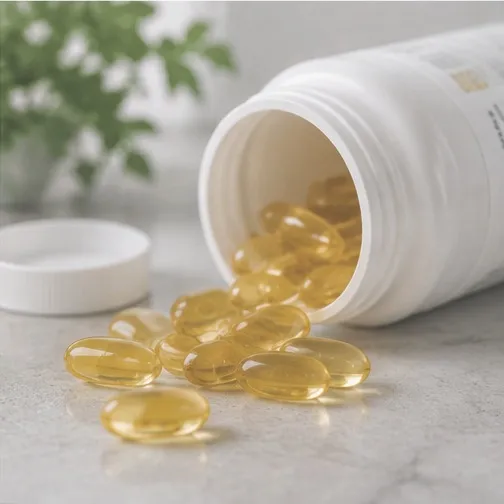
For softgel products containing fish oil, omega-3s, or other oxygen-sensitive ingredients, packaging can be just as important as the formulation itself. Oxygen exposure contributes to oxidation, which can lead to rancidity, off-odors, off-flavors, and nutrient degradation.
While antioxidants can help slow oxidation, packaging solutions can provide an additional layer of protection.
Oxygen-barrier bottles, induction seals, nitrogen flushing, and dark or opaque containers all protect the finished product.
Key packaging and storage considerations include:
Nitrogen flushing during bottling: Displaces residual headspace oxygen inside the bottle before sealing.
Oxygen-barrier materials: High-density polyethylene (HDPE) or glass bottles with barrier coatings minimize oxygen permeation over time.
Induction seals: Create an airtight secondary barrier under the cap.
Light protection: UV-blocking or opaque packaging prevents photo-oxidation.
Temperature control: Heat accelerates oxidation. Cool, dry conditions during transit and storage are essential.
Stability testing of a fish oil supplement conducted at 25°C for up to 18 months demonstrated that the product remained stable in terms of peroxide value, acid value, total omega-3, EPA, and DHA[8]. This affirms that the right combination of packaging and storage conditions can preserve fish oil potency over its full shelf life.
Fish Oil Softgel Stability Testing and Quality Control
A robust fish oil softgel quality control program is non-negotiable. It is the evidence layer that underpins every other stability effort.
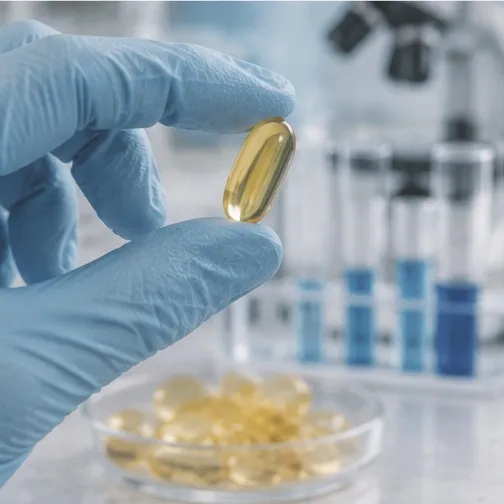
A quality fish oil should be tested not only for omega-3 content, but also for purity, freshness, contaminants, and overall quality. Manufacturers may conduct extensive internal testing, and some products also participate in independent third-party certification programs.
Core Oxidation Markers
Fish oil oxidation testing relies on a set of internationally recognized chemical markers:
Test | What It Measures | Industry Limit (GOED) |
Peroxide Value (PV) | Primary oxidation products | ≤5 meq O₂/kg |
p-Anisidine Value (AV) | Secondary oxidation products (aldehydes) | ≤20 |
TOTOX (2×PV + AV) | Total oxidation index | ≤26 |
EPA + DHA Content | Active omega-3 potency | Per label claim |
Acid Value (AV) | Free fatty acid level | ≤3 mg KOH/g |
Peroxide value (PV) is measured as a primary oxidation indicator to determine the oxidative stability during storage.
Consumer Reports testing found that some products had levels of oxidation that exceeded the total oxidation limit set by GOED, an industry group — an indication that these are lower-quality products that may be rancid.
Accelerated Stability Testing
A reliable stability program should examine the finished product, not only the incoming oil. Accelerated stability testing typically exposes samples to elevated temperature (40°C) and humidity (75% RH) to predict long-term product behavior.
Accelerated stability data has demonstrated that a protective shell composition can protect the fill material from oxidation, as evidenced by insignificant changes in peroxide and p-anisidine values and EPA and DHA assays after 6 months at both ambient and stressed conditions.
Traceability and Batch Records
For a quality product, a robust system of traceability should be in place to track the source and handling of the fish oil from the beginning. Regular quality control tests should be conducted on the oil to verify levels of EPA and DHA with no contaminants or degradation products.
Each batch should undergo rigorous testing for potency, disintegration, microbial limits, and shelf-life stability. This level of documentation is what separates a trustworthy fish oil softgel manufacturer from a commodity supplier.
Conclusion
The stability of a fish oil softgel is not determined by a single factor. It is the cumulative result of raw material quality, EPA/DHA concentration, antioxidant formulation, oxygen-controlled manufacturing, protective packaging, and comprehensive testing. Fish oil quality is not just about how much EPA and DHA are in the bottle. Those omega-3s should also be protected throughout manufacturing, packaging, storage, and distribution. For brands and buyers sourcing softgels, understanding these layers helps ensure a product that truly delivers on its health promises.
FAQ
Q1: What is the most important factor affecting fish oil softgel stability?
Oxidation is the most critical factor. It is driven by oxygen exposure, heat, light, and metal ions during processing, storage, and distribution. Controlling these elements from raw material sourcing through to final packaging is essential for a stable, high-quality fish oil softgel product.
Q2: What does TOTOX mean in fish oil softgel quality control?
TOTOX stands for Total Oxidation. It is calculated as 2×Peroxide Value + Anisidine Value. The Global Organization for EPA and DHA Omega-3s (GOED) recommends a TOTOX value of ≤26. This composite score reflects both primary and secondary oxidation products in a fish oil softgel.
Q3: Why is nitrogen flushing important in fish oil softgel manufacturing?
Nitrogen flushing replaces oxygen in mixing tanks, fill lines, and bottle headspaces during manufacturing. Because oxygen drives lipid oxidation, minimizing its presence at every production stage significantly slows the degradation of EPA and DHA in the finished deep sea fish oil softgel.
Q4: How should deep sea fish oil softgels be stored to maximize shelf life?
They should be stored in cool, dry, and dark conditions. Opaque or dark-colored bottles, induction-sealed caps, and oxygen-barrier packaging all help reduce oxidation. Avoid storing fish oil softgels in areas exposed to direct sunlight, high humidity, or significant temperature fluctuations.
Q5: How can I verify the quality of a fish oil softgel before sourcing from a manufacturer?
Request Certificates of Analysis (COA) covering peroxide value (PV), p-anisidine value (AV), TOTOX, EPA/DHA content, and heavy metal testing. Reputable fish oil softgel manufacturers also provide third-party lab verification, GMP compliance documentation, and accelerated stability study data to support their quality claims.
Partner With OriginBio
Looking for a reliable fish oil softgel manufacturer, supplier, or factory that combines rigorous science with end-to-end production support? OriginBio offers GMP-certified, HACCP- and ISO9001-compliant softgel manufacturing with full-service private label solutions. Contact us today: sales@originbionutra.com
OriginBio
A reliable one stop nutrition supplement contract manufacturing partner
 EN
 fr
 de
 ru










 Call us on:
 Email Us:
 Office Add:
