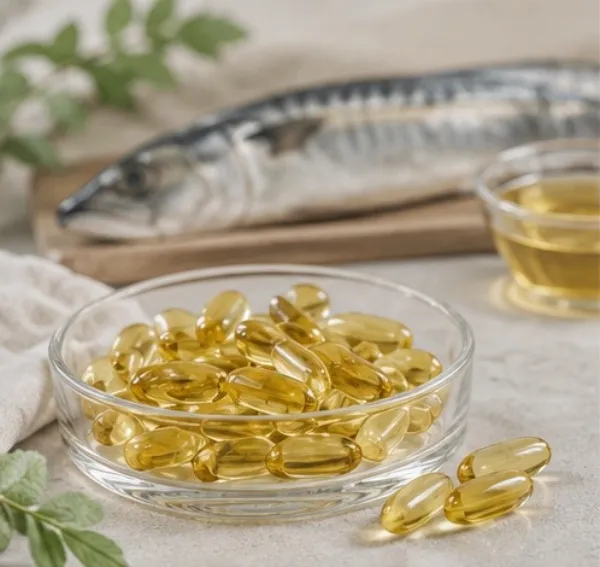
 To evaluate EPA, DHA and oxidation in fish oil softgels, check three things: potency, purity, and freshness. Potency means confirming actual EPA and DHA levels match label claims through third-party lab testing. Purity involves screening for heavy metals, PCBs, and dioxins using methods like gas chromatography. Freshness is measured through oxidation markers: peroxide value (PV), anisidine value (AV), and TOTOX score. A high-quality deep sea fish oil softgel should have a TOTOX score under 26, as recommended by GOED standards[1]. Together, these three checks tell you whether a product delivers real omega-3 benefits or just an empty capsule.
For supplement brands sourcing fish oil softgels, comparing products requires more than checking the total oil content or the supplier's headline specifications. This guide explains which analytical results and quality documents to review when evaluating EPA and DHA content, oxidative quality, and supplier transparency.
What EPA and DHA Levels Reveal About Fish Oil Softgel Quality?
EPA (eicosapentaenoic acid) and DHA (docosahexaenoic acid) are two key long-chain omega-3 fatty acids commonly specified in fish oil supplements. For buyers, their individual amounts are important quality and formulation parameters and should be reviewed separately from the total fish oil content.
Why EPA and DHA Amounts Matter More Than Total Fish Oil Content?
A 1000mg fish oil softgel sounds impressive, but the number alone means nothing. What matters is the EPA and DHA concentration inside that 1000mg. Some products contain only 30% active omega-3s, while others reach 80% or higher. Always check the actual milligram breakdown, not just the total capsule weight.
The Difference Between Natural Triglyceride and Ethyl Ester Forms
Fish oil comes in different molecular forms, and this affects both absorption and oxidation stability. Natural triglyceride (TG) form is closer to how omega-3s exist in fish, and studies show it absorbs better than ethyl ester (EE) form[2]. However, EE form allows for higher concentration levels during processing. Knowing which form you're buying helps you compare products fairly.
How Source Species Affects Omega-3 Ratios
Not all fish oils are equal. Anchovy, sardine, and mackerel oils typically contain different EPA-to-DHA ratios compared to salmon or cod liver oil. A reliable fish oil softgel manufacturer should disclose the fish species used, since this directly impacts the nutritional profile and sustainability credentials of the final product.
How to Verify EPA and DHA Content Through Laboratory Testing?
EPA and DHA content should be verified against the product specification using an appropriate analytical method. Buyers can review the supplier's batch-specific COA and, where required by their quality procedures, arrange independent testing to confirm the reported results.
Gas Chromatography Testing for Fatty Acid Profiling
Gas chromatography (GC) is commonly used to determine fatty acid composition. This technique separates and quantifies individual fatty acids, including EPA and DHA, with high precision. Reputable manufacturers run GC testing on every production batch and should provide a Certificate of Analysis (COA) showing these exact figures upon request.

Third-Party Certifications Worth Checking
Third-party testing or verification may provide additional evidence when evaluating fish oil products. However, the scope and requirements differ between programs, so buyers should verify the exact product covered, the current status of the listing or certification, and the attributes assessed.
Comparing Label Claims Against COA Results
Here's a simple comparison table to understand what a complete COA should include:
Test Parameter | What It Measures | Acceptable Range |
EPA Content | Active omega-3 level | Matches label ±10% |
DHA Content | Active omega-3 level | Matches label ±10% |
Peroxide Value | Primary oxidation | Below 5 meq/kg |
Anisidine Value | Secondary oxidation | Below 20 |
Heavy Metals | Contamination | Below USP limits |
Understanding Oxidation Indicators: Peroxide Value, Anisidine Value and TOTOX
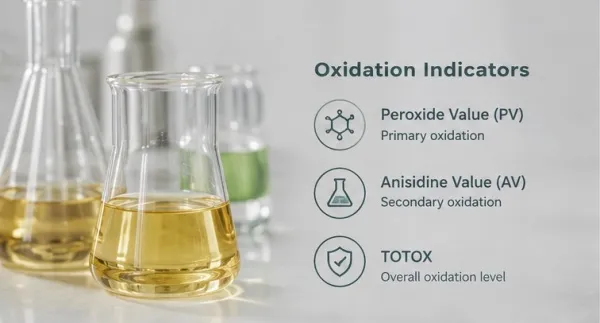
Fish oil contains polyunsaturated fatty acids that are susceptible to oxidation during processing and storage. Oxidation can generate primary and secondary products, so evaluating oil quality generally requires more than one indicator. Peroxide value, p-anisidine value, and TOTOX provide complementary information about oxidative quality when the methods are suitable for the oil being tested.
oxidation-indicators
What Peroxide Value Tells You About Early Oxidation
Peroxide value (PV) measures primary oxidation products formed early in the degradation process. Fresh fish oil should have a PV below 5 milliequivalents per kilogram (meq/kg), according to GOED guidelines[1]. A result should be assessed against the applicable specification and interpreted alongside other oxidation indicators, since PV alone does not describe every stage of the oxidation process.
Why Anisidine Value Catches What Peroxide Value Misses
Anisidine value (AV) measures secondary oxidation byproducts, including aldehydes, that form as primary peroxides break down further. Since PV alone doesn't tell the full oxidation story, AV fills that gap. Combined, these two tests give a much clearer picture of overall oil freshness and shelf stability.
Calculating TOTOX Score for Overall Freshness Assessment
TOTOX combines both values using this formula: TOTOX = (2 × PV) + AV. GOED recommends a TOTOX score below 26 for finished fish oil products[1]. This single number gives buyers and manufacturers a quick, standardized way to judge overall oxidative quality.
How Processing and Storage Conditions Affect Fish Oil Oxidation?
Oxidative quality can change during processing, packaging, transportation, and storage. For buyers, it is therefore important to assess both the oil's initial quality and the controls used to maintain it through the intended shelf life.
The Role of Antioxidants in Preventing Rancidity
Natural antioxidants like vitamin E (tocopherols) are commonly added to fish oil to slow oxidation. Without proper antioxidant protection, omega-3 fatty acids break down faster when exposed to heat, light, and oxygen. This is why ingredient lists matter just as much as the fish oil itself.
Temperature-Controlled Manufacturing Environments
Processing conditions, oxygen exposure, and packaging can affect the oxidative quality of fish oil. Depending on the manufacturing process, controls may include managing temperature, limiting unnecessary oxygen exposure, and selecting suitable packaging. OriginBio's production facility operates under GMP-regulated, 100,000-grade clean workshop conditions to minimize these risks throughout manufacturing.
Packaging and Shelf Life Considerations
Light-blocking packaging and proper sealing prevent oxidation after production too. Since oxidation continues even after softgels are made, storage conditions at warehouses and retail shelves matter just as much as the manufacturing process itself.
finished-product
Which Quality Control Tests Help Verify Fish Oil Softgel Stability?
Stability studies help assess how a fish oil softgel's specified quality attributes change over time under defined storage conditions. The study design, testing schedule, and results should be reviewed together when assessing the proposed shelf life.
Accelerated Stability Testing Methods
Accelerated stability testing exposes softgels to elevated temperature and humidity for a set period, simulating months of aging in just weeks. This helps manufacturers predict oxidation rates and confirm shelf-life claims before products reach the market.
Sensory Evaluation for Freshness Confirmation
Trained panels assess fish oil for off-odors and rancid taste, which often signal oxidation before lab numbers even catch it. While sensory testing is subjective, it remains a practical, fast screening tool used alongside chemical analysis.
Comparing Testing Protocols Across Manufacturers
Testing Stage | Purpose | What Buyers Should Confirm |
Raw material testing | Assess incoming oil against its specification | Applicable test parameters, acceptance criteria, and batch records |
In-process controls | Monitor relevant manufacturing parameters | Which parameters are monitored and how deviations are handled |
Finished-product testing | Verify the softgel against its agreed specification | Required tests, methods, and batch-specific results |
Stability studies | Assess changes in quality over time | Storage conditions, testing intervals, acceptance criteria, and supporting data |
What Supplement Manufacturers Should Check in Fish Oil Softgel COAs and Specifications?
Before placing an order, buyers should know exactly what documents and data to request from any supplier.
Essential Documents to Request Before Ordering
Always ask for a full COA, including EPA/DHA content, PV, AV, TOTOX, and heavy metal screening results. Request documentation on sourcing, sustainability certifications, and manufacturing facility credentials too. A transparent fish oil softgel manufacturer will provide these without hesitation.
Red Flags That Signal Poor Quality Control
Potential concerns include specifications that do not define acceptance criteria, analytical reports that cannot be linked to the relevant product or batch, and unclear explanations of test methods or quality controls.
If a requested report is unavailable, ask the supplier to explain the reason and identify what alternative evidence can be provided. Assess any documentation gaps against your quality requirements before making a purchasing decision.
Why Private Label Partners Need Transparent Testing Records
For brands developing their own best fish oil softgel products, working with a manufacturer that maintains detailed, batch-level testing records protects your brand reputation. OriginBio supports private label partners with full documentation, from raw material sourcing through finished product testing, ensuring consistency across every production run.
Conclusion
Evaluating fish oil softgels requires more than checking the total oil content or relying on a supplier's headline claims. Buyers should compare EPA and DHA results with the agreed specification, review suitable oxidation data, and confirm the scope of contaminant testing and batch documentation.
For supplement brands and private label buyers, supplier qualification should also include a review of manufacturing controls, available stability evidence, and documentation relevant to the intended market. These checks provide a clearer basis for comparing products and defining quality requirements before placing an order.
FAQ
Q1: What's a good EPA and DHA ratio in fish oil softgels?
There is no single EPA-to-DHA ratio that suits every fish oil product. The appropriate profile depends on the intended formulation, target market, label requirements, and product positioning. Buyers should confirm the individual EPA and DHA amounts per serving and compare them with the agreed specification.
Q2: How can I tell if my fish oil softgels are oxidized?
A fishy, rancid smell or taste usually signals oxidation. Lab testing through PV, AV, and TOTOX scores provides accurate confirmation beyond sensory clues, especially since mild oxidation isn't always detectable by smell alone.
Q3: What TOTOX score should I look for in finished products?
GOED recommends a TOTOX score below 26 for finished fish oil products. Buyers should confirm that the standard and analytical method are suitable for the specific oil, and review the underlying PV and p-anisidine results as well.
Q4: Does OriginBio provide third-party testing documentation?
The available testing documentation depends on the product and project requirements. Contact OriginBio to confirm which product specifications, COAs, analytical reports, and other quality documents are available for your requested fish oil softgel formulation.
Ready to Source High-Quality Fish Oil Softgels?
If you are sourcing fish oil softgels for a supplement brand or private label project, OriginBio can discuss your target EPA/DHA profile, product specifications, packaging requirements, and purchasing needs.
Contact sales@originbionutra.com to discuss the documentation, testing information, sample options, and order terms available for your project. Product specifications and service scope can be confirmed before moving forward.
OriginBio
A reliable one stop nutrition supplement contract manufacturing partner
 EN
 fr
 de
 ru











 Call us on:
 Email Us:
 Office Add:
