Deep Sea Fish Oil Softgel Specifications
| Item | Specification |
| Softgel Size | 500 mg / 700 mg |
| Shell Material | Plant polysaccharides / Modified starch / HPMC |
| Color | Customizable |
| Packaging | Customizable |
| Fish Oil | EPA 50% / DHA 40% |
| CoQ10 | 99% |
| Vitamin D3 | 100,000 IU |
| Vitamin K2 | 2,000 ppm |
MOQ
| 300,000 capsules |
| Sample | 1~2 bottles Available |
| Production Time | 4 ~ 5 weeks |
| Need a different EPA/DHA ratio or active ingredient combination? OriginBio can adjust the formula according to your target dosage, positioning, and market requirements. |
Fish Oil Weight Is Different from EPA and DHA Content
The total weight of fish oil in a softgel does not indicate the amount of EPA and DHA it delivers. A clear specification should state fish oil fill weight, EPA content, DHA content and serving size separately.
For combination formulas, the total fill also needs to accommodate the additional ingredients and excipients. Capsule capacity should therefore be evaluated before confirming the final serving size.
For background on concentration and oil forms, read our guide to fish oil EPA/DHA specifications and TG versus EE.
Custom Fish Oil Softgels for Your Brand
Custom fish oil softgel development combines an EPA/DHA target with practical decisions about capsule capacity, complementary ingredients, shell selection and packaging. A defined product brief helps keep the formula and manufacturing requirements aligned.
EPA/DHA Profiles and Serving Sizes
Start with the amount of EPA and DHA your product is intended to deliver per serving. The selected oil concentration, fill weight and number of softgels per serving can then be reviewed together. Where multiple oil grades are available, compare their specifications and supporting documents before selecting the material for your product.
Fish Oil Combination Formulas
Complementary ingredients can introduce additional formulation and testing requirements. Each combination should be evaluated for compatibility, fill characteristics and stability.
| Formula Concept | Development Considerations |
| Fish Oil EPA/DHA | Oil concentration, active content, fill weight and serving size |
| Fish Oil + CoQ10 | CoQ10 form, dispersion, blend consistency and capsule capacity |
| Fish Oil + Vitamin D3 | Target Vitamin D3 content, ingredient potency and analytical requirements |
| Fish Oil + Vitamin D3 + K2 | Ingredient forms, inclusion levels, compatibility and stability planning |
These concepts are starting points for technical review. Final availability depends on the agreed specification, ingredient sourcing and destination-market requirements.
Softgel Appearance and Packaging
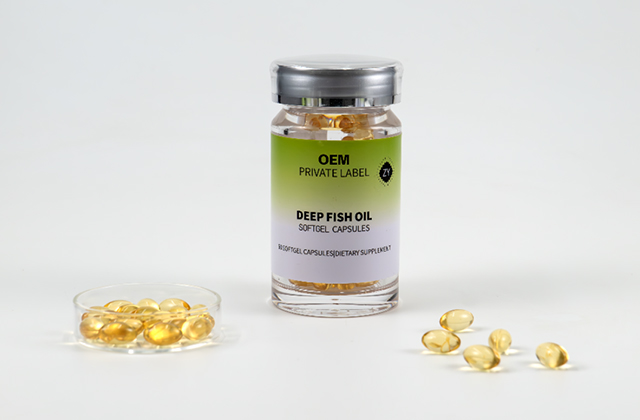
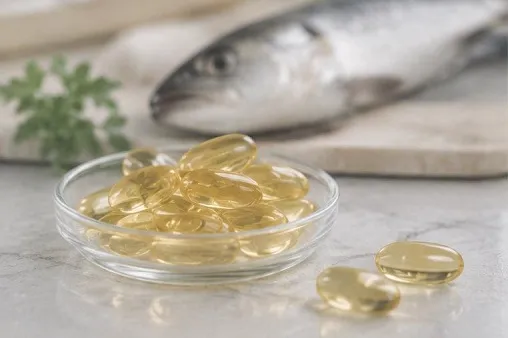
Review the softgel size, shape, shell composition and appearance alongside your packaging brief. Product development should balance brand presentation with filling performance, shell compatibility and storage requirements.
Private Label Fish Oil Softgel Manufacturing
Private label fish oil manufacturing turns an approved product specification into a finished supplement carrying your brand. The process connects formulation, material sourcing, encapsulation, quality checks and packaging.
1. Define Your Product Requirements
Share your target market, EPA/DHA content, proposed serving size, complementary ingredients, order quantity and packaging preferences. Existing formulas or reference specifications can also be submitted for review.
2. Review the Formula and Materials
The development review considers oil specifications, complementary ingredients, shell compatibility and capsule capacity. Testing and documentation requirements should be agreed before the project proceeds.
3. Evaluate Samples and Approve Specifications
Review the sample against the proposed requirements, including appearance, size and packaging presentation. Confirm the final formula, artwork and acceptance criteria before bulk production.
4. Manufacture and Package the Softgels
Production follows the approved specification, with relevant in-process checks and packaging controls. Any changes to materials or specifications should be reviewed through the agreed approval process.
5. Complete Release Checks and Documentation
Review the agreed testing results and batch documents before product release. Delivery timing is established according to material availability, production scheduling, packaging and testing requirements.
Packaging for Fish Oil Softgels
Packaging should be selected with the formula, storage conditions and distribution requirements in mind. Review the container, closure, seal and any protective measures as part of the finished-product specification.
Bottle count, label design and outer packaging should match the approved serving size and product information.
Explore our private label supplement manufacturing services for broader formulation and packaging support.
Fish Oil Softgel Quality Testing and Documentation
Fish oil quality evaluation should address ingredient identity, EPA/DHA content, oxidation, relevant contaminants and finished-softgel performance. The testing scope, methods and acceptance criteria should be agreed for the specific product.
| Quality Review Area | Information to Request |
| Oil Identity and Traceability | Raw-material specification, supplier information and batch references |
| EPA and DHA Content | Reported content, analytical method and the basis used for calculation |
| Oxidation Indicators | Available peroxide value, p-anisidine value and TOTOX results, where applicable |
| Contaminants | Relevant heavy-metal and other contaminant testing agreed for the project |
| Softgel Performance | Applicable appearance, fill-weight, seal integrity, leakage and disintegration checks |
| Stability and Storage | Evidence supporting the proposed packaging, storage conditions and shelf life |
| Batch Documentation | Available COAs, test reports and finished-product release records |
Match the Documents to the Product
A raw-material COA and a finished-softgel report provide different information. Check the sample description, batch number, report date, test method and results to understand what each document demonstrates.
Reports should be relevant to the selected oil, formula and finished-product specification. A result from one batch or formulation should not be presented as evidence for every product option.
Discuss our finished-product testing process when defining the verification requirements for your fish oil softgel project.
Fish Oil Softgel Manufacturing FAQs
1. Can You Manufacture Private Label Fish Oil Softgels?
Yes. OriginBio provides OEM/ODM and private label support for fish oil softgel projects, including formula review, capsule specifications and packaging. The available services and production requirements are confirmed according to your product brief.
2. Can the EPA and DHA Content Be Customized?
EPA and DHA targets can be reviewed during formulation development. Feasibility depends on the available oil grades, capsule fill capacity, complementary ingredients and serving size. Specify the desired milligrams of EPA and DHA per softgel or serving when requesting a quotation.
3. Which Oil Forms and Softgel Shells Are Available?
Oil forms and shell materials should be confirmed for the specific project. Request the relevant raw-material specifications and discuss compatibility with your formula. A plant-derived shell does not make a fish-oil-filled product vegan.
4. Which Quality Documents Can I Request?
Ask for the available oil specifications, COAs and relevant finished-product reports. Confirm the scope of EPA/DHA analysis, oxidation testing, contaminant screening and stability documentation for your proposed formula. Additional testing may need to be arranged separately.
 EN
 fr
 de
 ru











 COA-Fish Oil Softgel
 Call us on:
 Email Us:
 Office Add:
