Meso-zeaxanthin is one of three powerful macular carotenoids — alongside lutein and zeaxanthin — that your eyes depend on for protection and optimal vision. It is produced in the retina from lutein by isomerization. Yet it also delivers measurable visual benefits through targeted supplementation. This article explores what meso-zeaxanthin is, what clinical evidence shows, how to dose it correctly, what formulation factors matter, and how to source a high-quality ingredient from a certified ingredient supplier.
What Is Meso-Zeaxanthin and How Does It Support Macular Health?
Lutein (L), zeaxanthin (Z), and meso-zeaxanthin (MZ) are the three major xanthophylls found in the eye. These three compounds concentrate selectively in the macula — the central region of the retina responsible for sharp, detailed vision.
The (3R,3′S) stereoisomer is called meso-zeaxanthin. The macula mainly contains the (3R,3′R)- and meso-zeaxanthin forms. It determines how the molecule positions itself within the retinal membrane.

Positioned at the centre of your macula, meso-zeaxanthin is on the front line against oxidative stress caused by blue light, sunlight, and everyday metabolic processes. Think of it as your retina's inner shield.
Mesozeaxanthin and RR-zeaxanthin are perpendicular to the cell membranes to better protect the lipid membrane from oxidation, and also to absorb similar wavelengths of high-energy light. This orientation makes meso-zeaxanthin especially effective.
Three xanthophylls (L, Z, and MZ) are found selectively within the retina, concentrated in the macula, and have been appropriately referred to as macular pigments. Together, they form the body's natural optical filter.
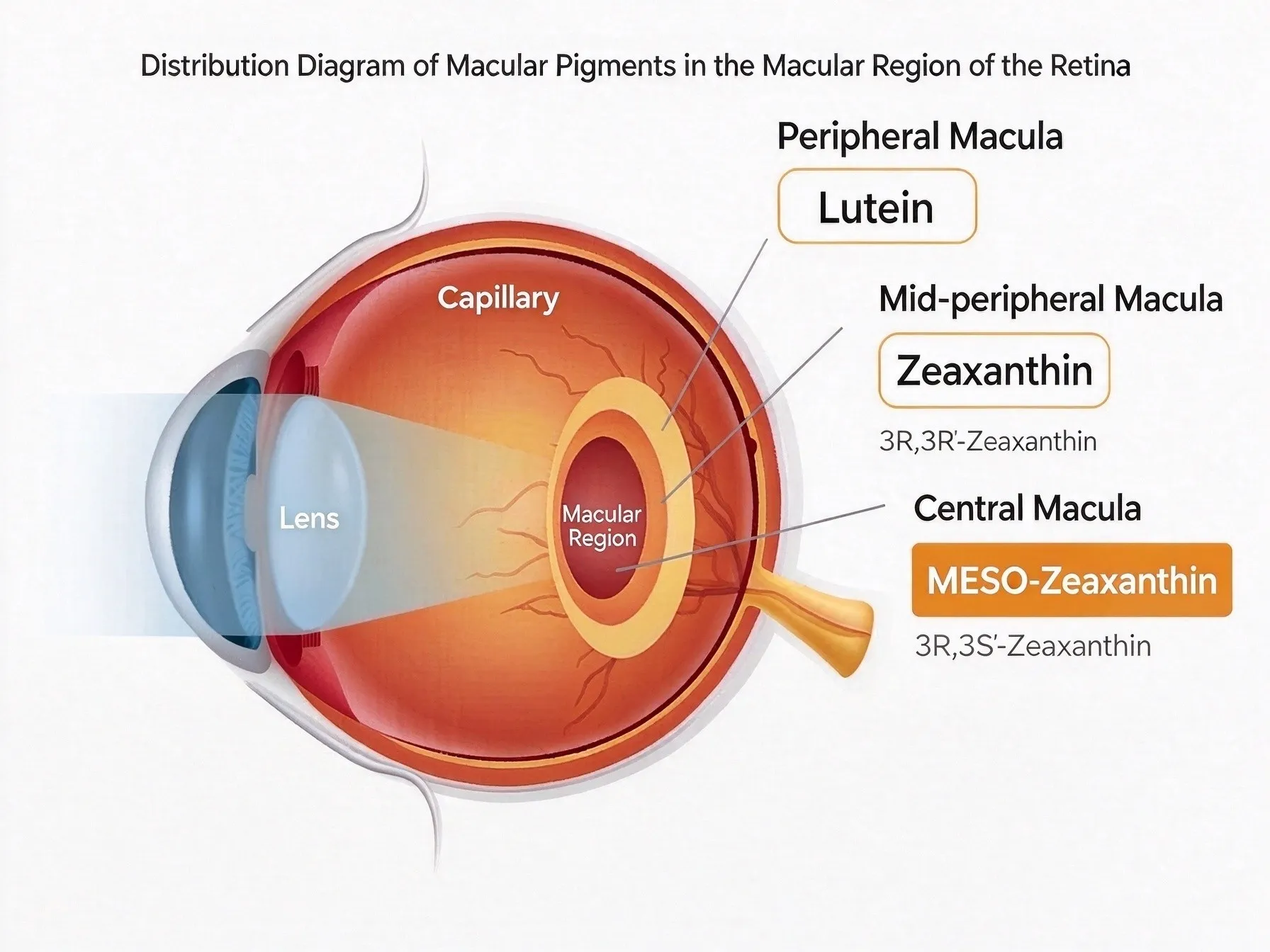
Key structural fact:
Carotenoid | Location in Retina | Primary Function |
Lutein | Peripheral macula | Blue light filtration, antioxidant |
Zeaxanthin (RR) | Central macula | Antioxidant, membrane protection |
Meso-Zeaxanthin | Central fovea (peak) | Oxidative stress defence, light filtering |
Meso-Zeaxanthin Benefits: What Does Clinical Research Show?
Macular Pigment Optical Density (MPOD)
MPOD is a validated, measurable indicator of your retina's protective capacity. Higher MPOD correlates with better visual performance and lower AMD risk.
Supplementation of mesozeaxanthin has resulted in both increased serum levels and macular pigment optical density, which, given its exceptional antioxidant properties, bodes well for human health.
Augmentation of the macular pigment optical density across its spatial profile and enhancements in contrast sensitivity were best achieved after supplementation with a formulation containing high doses of meso-zeaxanthin in combination with lutein and zeaxanthin.
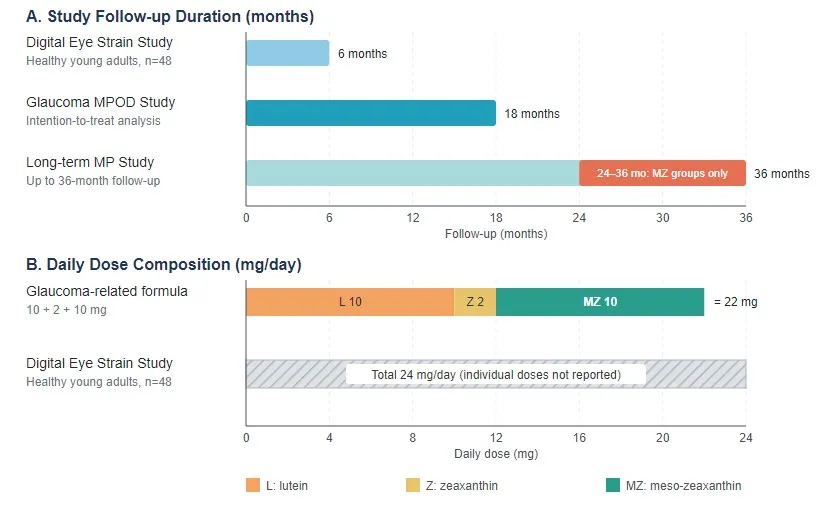
Furthermore, macular pigment rose from baseline in all groups, with further gains between 24 and 36 months only in the meso-zeaxanthin groups. Macular pigment may keep rising over several years with formulas that include meso-zeaxanthin.
Age-Related Macular Degeneration (AMD)
Epidemiological studies have revealed that low macular pigment levels are associated with higher risk of AMD.
Randomized, placebo-controlled clinical trials have demonstrated that xanthophyll supplementation increases macular pigment levels, improves visual function, and decreases the risk of progression to late AMD, especially neovascular AMD.
The data indicate that a supplement containing predominantly meso-zeaxanthin is generally effective at raising macular pigment density, and may turn out to be a useful addition to the defenses against AMD.
Digital Eye Strain
In 48 healthy young adults with at least 6 hours of daily screen time, 24 mg a day of lutein, zeaxanthin and meso-zeaxanthin for 6 months improved macular pigment, sleep quality, headache frequency, eye strain, eye fatigue and visual performance compared with placebo.
Glaucoma
The primary intention-to-treat analyses demonstrated a beneficial effect on MPOD of supplementation with 10 mg lutein, 2 mg zeaxanthin, and 10 mg meso-zeaxanthin. A supplement formulation containing these doses can generate a sizeable and continuous increase in overall MPOD throughout an 18-month treatment window, independent of baseline MPOD levels.
Meso-Zeaxanthin Dosage and Its Ratio with Lutein and Zeaxanthin
Dosage is a critical variable. Too little produces minimal benefit. The right ratio unlocks synergistic effects.
A 10 mg Lutein · 10 mg Meso-Zeaxanthin · 2 mg Zeaxanthin formula has been shown to significantly increase macular pigment optical density (MPOD), a measurable indicator of your retina's protective power.
Twenty RCTs involving 938 AMD patients and 826 healthy subjects were identified. Stratified analysis showed a greater increase in MPOD among trials supplemented and combined with meso-zeaxanthin.
Comparison of Common Supplement Formulas:
Formula | Lutein | Meso-Zeaxanthin | Zeaxanthin | Typical Use Case |
Standard L+Z | 10 mg | 0 mg | 2 mg | General eye support |
Triple Carotenoid (10:10:2) | 10 mg | 10 mg | 2 mg | AMD support, MPOD improvement |
High-MZ Formula | 3 mg | 17 mg | 2 mg | Advanced macular protection |
Digital Screen Formula | Variable | Variable | Variable | Blue light & screen fatigue |
Safety note: Long-term supplementation with meso-zeaxanthin has shown a strong safety profile, with no adverse effects reported in clinical research. It is considered just as safe as lutein and zeaxanthin when used at recommended doses.
Meso-Zeaxanthin Stability, Formulation, and Supplement Applications
Understanding formulation is essential for manufacturers and brands. Ingredient quality and format affect bioavailability, shelf life, and final product performance.
Key Formulation Considerations
Bioavailability: Meso-zeaxanthin is fat-soluble. So it absorbs best when taken with a fat-containing meal. Softgel formats using lipid carriers (e.g., sunflower oil) deliver superior absorption compared to plain powder capsules.
Stability factors to control (see also our guide to microencapsulated lutein for gummy applications):
Factor | Impact | Recommended Control |
Light exposure | Causes carotenoid degradation | Opaque packaging, dark storage |
Oxygen | Oxidizes pigment molecules | Nitrogen flushing during fill |
Heat | Accelerates breakdown | Low-temperature manufacturing |
pH | Affects structural stability | Encapsulation techniques |
Delivery formats for meso-zeaxanthin powder (for a full comparison, see hard capsules vs softgels vs tablets):
Softgels – Highest bioavailability; ideal for high-dose eye supplements
Capsules – Clean label appeal; good for powder-blend formulas
Gummies – Strong consumer appeal; requires careful heat management
Tablets – Cost-effective; suited for mass-market products
Sachets / Powders – Convenient for drink mixes or functional food formats
Why Formulation Partners Matter
A strong manufacturing partner manages ingredient sourcing, encapsulation, and stability testing under one roof. This reduces supply chain risk. It also ensures consistent potency from batch to batch.
Whether as dietary intake or part of lutein and/or zeaxanthin isomer(s) supplementation, mesozeaxanthin has already been part of studies investigating the nutritional impact on visual performance and age-related macular degeneration (AMD) risk reduction. This broad application base makes it a versatile B2B ingredient.
How to Choose High-Quality Meso-Zeaxanthin Ingredients?
Sourcing bulk meso-zeaxanthin requires careful evaluation. Not all suppliers offer the same purity, traceability, or regulatory compliance. Here is a practical checklist.
Ingredient Quality Checklist
Evaluation Criterion | Why It Matters |
Purity specification | Ensures clinical equivalency |
Heavy metal testing | Critical for regulatory markets |
Microbial testing | Required for GMP compliance |
Stability data (12-24 months) | Confirms shelf-life claims |
CoA (Certificate of Analysis) | Verifies every batch |
HACCP / ISO9001 certification | Signals production system quality |
Non-GMO / allergen status | Required for many global markets |
What to Ask Your Supplier
Do you provide purity specifications for meso-zeaxanthin content?
What is your minimum order quantity (MOQ) for bulk powder?
Can you support private label formulation from raw material to finished product?
Do your facilities meet GMP, HACCP, and ISO9001 standards?
Do you provide samples for quality testing before bulk orders?
The best suppliers answer all five questions confidently. They also offer full traceability and regulatory documentation.
Conclusion
Meso-zeaxanthin is not a minor carotenoid. It plays a central, well-documented role in retinal health. Clinical evidence confirms its ability to raise MPOD, enhance contrast sensitivity, and reduce AMD progression risk. The 10:10:2 formula (lutein:MZ:zeaxanthin) is the most validated ratio for eye health supplements. For supplement brands and formulators, selecting a certified, GMP-compliant supplier is the first step to a credible, effective product.
FAQ
Q1: What is meso-zeaxanthin, and why is it important for eye health?
Meso-zeaxanthin is a macular carotenoid concentrated in the central fovea. It filters blue light and protects retinal cells from oxidative stress, supporting long-term vision health.
Q2: Can meso-zeaxanthin help prevent age-related macular degeneration (AMD)?
Yes. Clinical trials show that meso-zeaxanthin supplementation significantly increases MPOD, a key biomarker linked to lower AMD risk and better visual performance outcomes.
Q3: What is the best dosage of meso-zeaxanthin for eye health supplements?
The most clinically studied and effective formula is 10 mg meso-zeaxanthin, 10 mg lutein, and 2 mg zeaxanthin daily, validated across multiple peer-reviewed randomized controlled trials.
Q4: Is meso-zeaxanthin safe for long-term daily supplementation?
Yes. Long-term clinical studies report no adverse effects. Meso-zeaxanthin is considered safe at recommended doses, comparable to the safety profile of lutein and zeaxanthin.
Q5: What should I look for when sourcing bulk meso-zeaxanthin from a manufacturer?
Prioritize suppliers with GMP, HACCP, and ISO9001 certifications. Request Certificates of Analysis, stability data, purity specs, and confirmed MOQ to ensure ingredient quality and supply reliability.
Work With OriginBio - Your Trusted Meso-Zeaxanthin Manufacturer
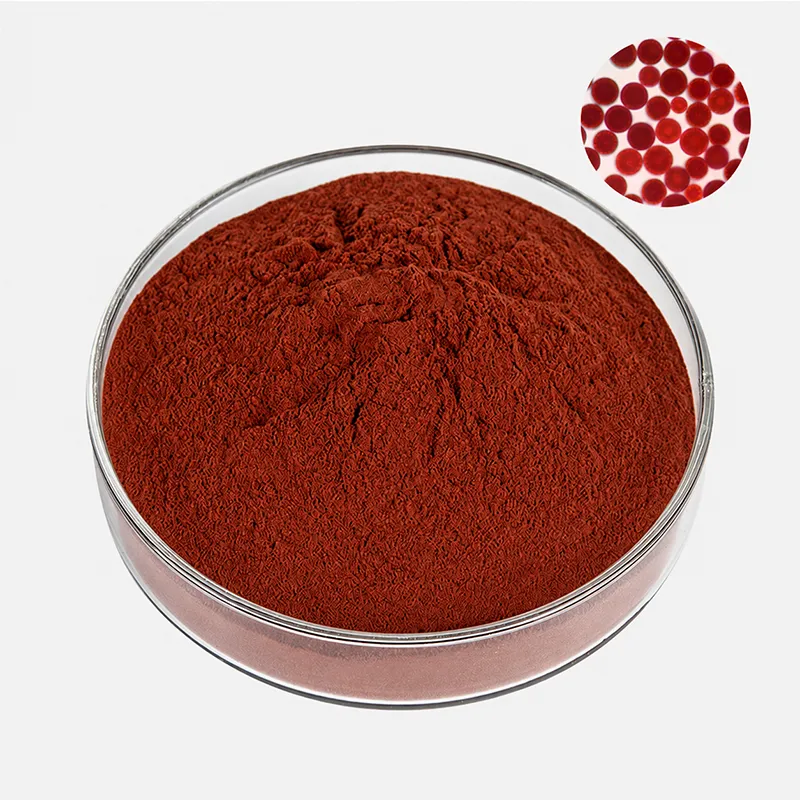
OriginBio is a science-driven nutraceutical manufacturer and supplier with GMP, HACCP, and ISO9001-certified facilities. We supply bulk meso-zeaxanthin powder and offer full private-label supplement manufacturing with low MOQ. Ready to formulate your next eye health product? Contact us today: sales@originbionutra.com
OriginBio
A reliable one stop nutrition supplement contract manufacturing partner
 EN
 fr
 de
 ru









 Call us on:
 Email Us:
 Office Add:
