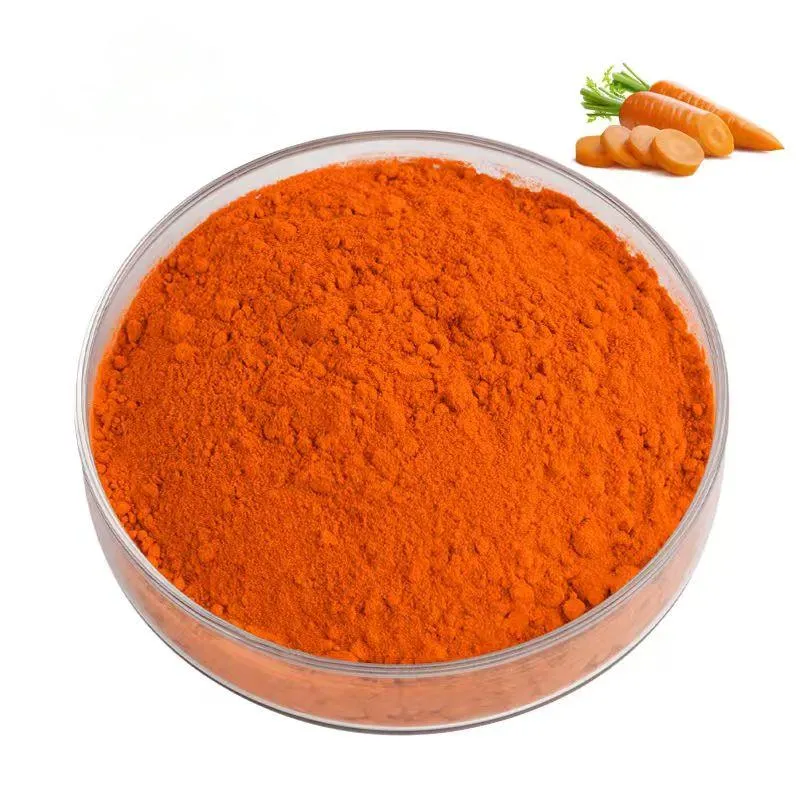
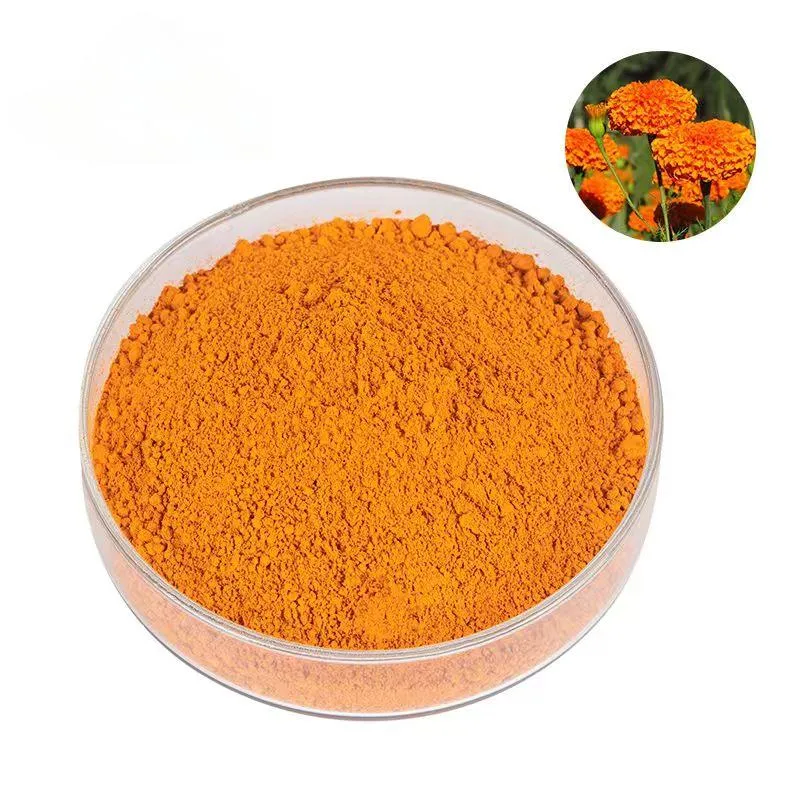
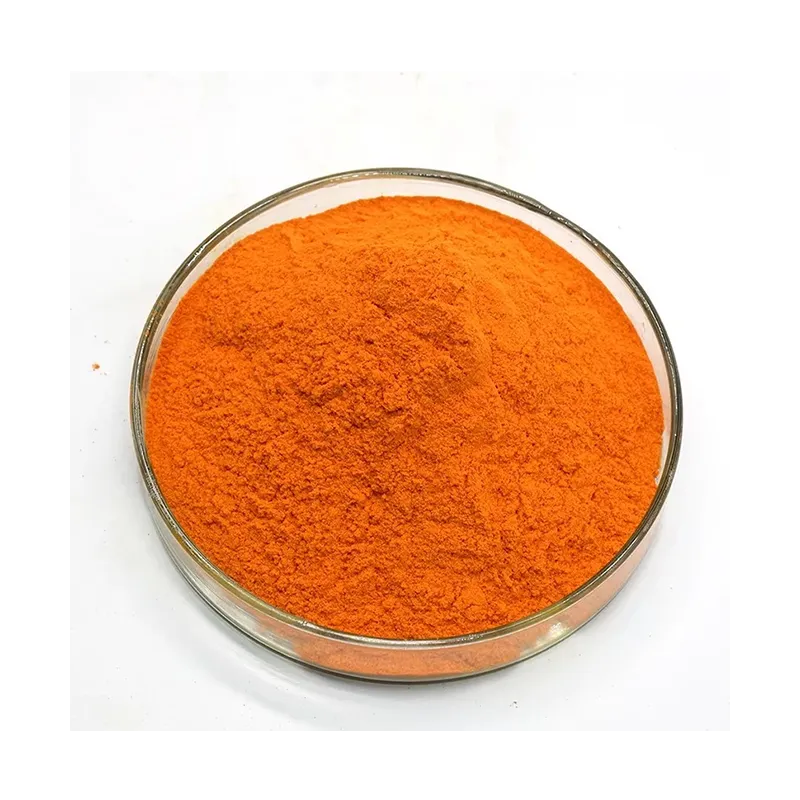
Beta-carotene is a natural fat-soluble carotenoid that can be extracted from plant sources (such as carrots, pumpkins, bell peppers, and microalgae like Dunaliella salina and Haematococcus pluvialis) through extraction, purification, and crystallization processes. It can also be produced through microbial fermentation or chemical synthesis. Its core biological activity is provitamin A activity, which can be converted into vitamin A in the human body. It also has significant antioxidant capacity and is a widely used functional raw material in the food, health product, and daily chemical industries.
Advantages of Beta Carotene
We have strong ability to Fermentation, extraction, granulation, customization, and finish your private labels. Most retailers have their own brand, they need customized supplements and packaging services. If you are seeking to a trusted manufacturer, we can promise you that adding your company name, creating your design or customized packaging services.
Dosage Form Capabilities:
Crystal>96%
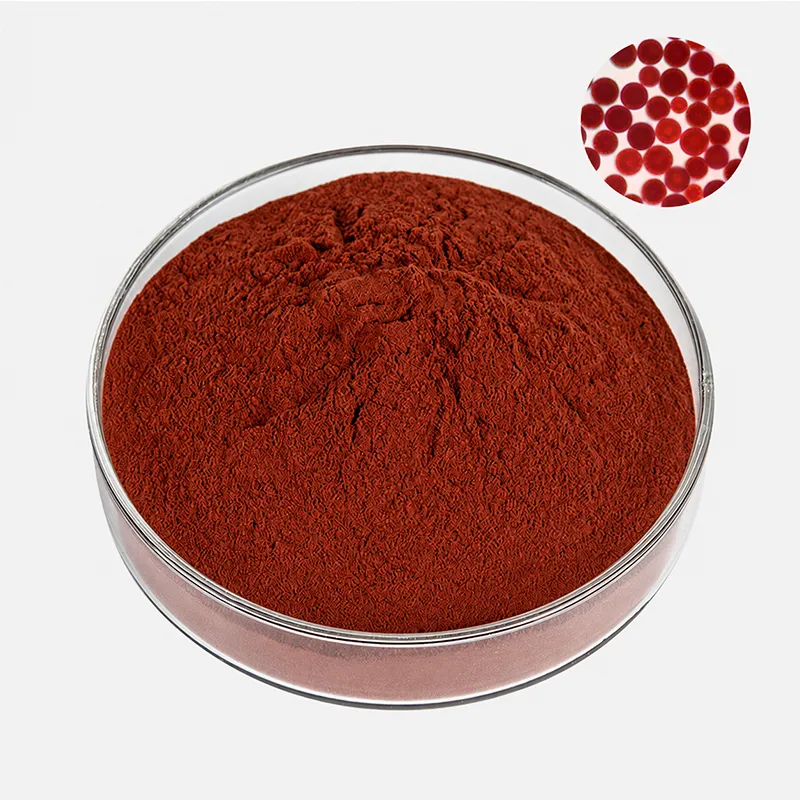
Beadlet: 10%, 20%
Emulsion: 2%, 5%
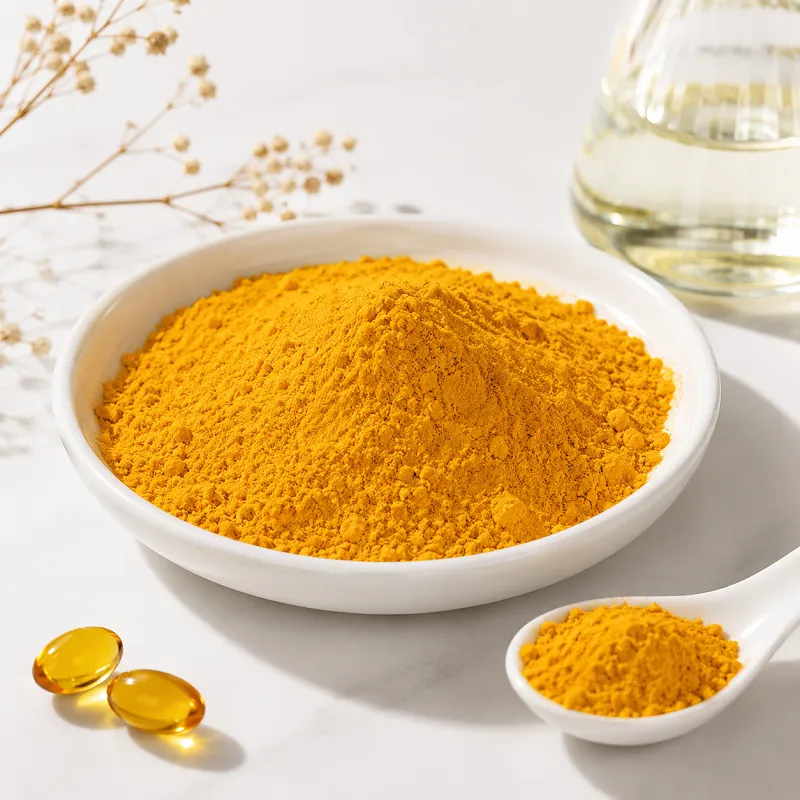
Powder 1%, 5%,10%
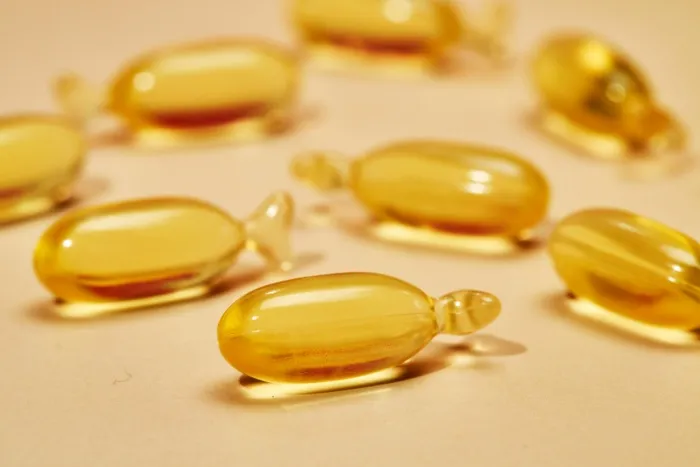
Oil suspension 30%
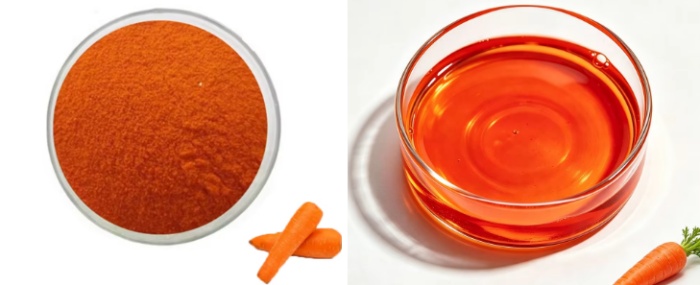
Specifications of Beta Carotene
Certificate of Analysis |
Product Name | 10% Beta-Carotene |
Batch Quantity | 780kgs |
Storage Condition | Store in cool & dry place, Keep away from strong light and heat. |
|
Items | Specifications | Results | Method |
Description | Red or reddish-brown free-flowingbeadlets, with white spots of foodstarch | Red-brownfree-flowingbeadlets, | Visual |
Identification | Conforms to the reference solution | Conform | HPLC |
Loss on drying | ≤8.0% | 1.4% | USP |
Heavy metals(as Pb) | ≤0.001% | <0.001% | USP |
Arsenic(as As) | ≤3ppm | <3ppm | Ph.Eur.2.4.2 |
An aqueous dispersion of chromaticity | ≥110 | 131 | UV-Vis |
Total carotenoid content | ≥10.0% | 15.1% | UV-Vis |
Beta-Carotene | ≥10.0% | 13.0% | HPLC |
Particle Size Pass through sieve No.20 Pass through sieve No.40 Pass through sieve No.100 | 100% ≥85% ≤15% | 100% 97% 0.80%
| USP USP USP |
Microbial TestTotal aerobic microbial count Total moulds and yeast count Enterobacteria
Salmonella Escherichia coli Staphylococcus aureus Pseudomonas aeruginosa | ≤1000cfv/g ≤100cf/g ≤10cfu/g
n.d/25g n.d./10g n.d/10g n.d./10g
| 130cf/g <10cfu/g <10cfu/g
n.d n.d. n.d. n.d.
| USP USP USP
USP USP USP
|
Conclusion: Conform with specification |
Certificate of Analysis |
Product Name | Beta-Carotene Oil |
Inspection Basis | USP/EP |
Packing | 5KG/Bottle;10KG/Carton |
Storage Condition | Store in cool & dry place, Keep away from strong light and heat. |
|
Items | Specifications | Results | Method |
Appearance | Red to reddish brown liquid,noforeign matter and no odor. | Complies | Visual |
Assay(Beta-Carotene) | ≥30.0% | 31.1% | UV-Vis |
Absorbance ratios | A455nm/A340nm≥1.5 A455nm/A483nm:1.14-1.18 | 1.8 1.15 | UV-Vis |
Absorbance spectrum in cyclohexane | Max.At 453-457nm | 455nm | UV-Vis |
Peroxide Value | ≤15.00meq/kg | 4.2meq/kg | USP |
Heavy Metals | ≤5.0ppm | <5.00ppm | USP |
Arsenic | ≤1.0ppm | <0.01ppm | USP |
Lead | ≤2.0ppm | <0.05ppm | USP |
Conclusion:The product is inspected in accordance with USP/EP standard,the result conform to the provisions and is judged to be qualified. |
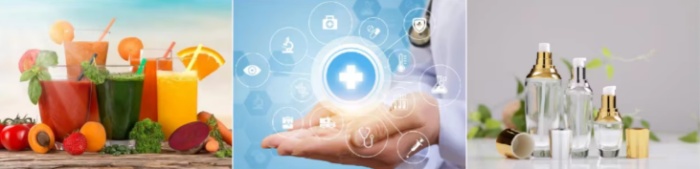
Application of Beta Carotene
1. Beta Carotene is used in food and beverage;
2. Beta Carotene is used as a beneficial ingredient in dietary supplements;
3. Beta Carotene is used in Cosmetics
FAQ
1. What is Microencapsulated Beta Carotene?
Microencapsulated Beta Carotene is a stabilized delivery format where beta carotene, a naturally occurring carotenoid, is surrounded by a protective matrix.
Because beta carotene is sensitive to oxygen, light, heat and oxidation, microencapsulation helps improve its stability, handling properties and compatibility with various food and supplement applications.
2. What are the advantages of Microencapsulated Beta Carotene?
Microencapsulated Beta Carotene provides several formulation benefits:
Improved protection against oxidation and degradation
Enhanced stability during processing and storage
Better dispersibility in aqueous-based applications
Reduced color staining during handling
Improved powder flowability and blending performance
This makes it easier to incorporate beta carotene into modern nutritional products.
3. What applications can Microencapsulated Beta Carotene be used in?
Microencapsulated Beta Carotene is suitable for various applications, including:
Multivitamin supplements
Eye-health formulations
Beauty-from-within products
Functional beverage powders
Gummies
Sachets and stick packs
Protein and nutrition powders
Food and beverage fortification
The microencapsulated format is particularly suitable for dry-mix applications where stability and uniform dispersion are important.
4. What specifications are available for Microencapsulated Beta Carotene?
Microencapsulated Beta Carotene can be customized according to formulation requirements, including:
Beta carotene concentration
Carrier system selection
Particle size distribution
Water dispersibility
Color intensity
Stability requirements
Common quality parameters may include:
Beta carotene assay
Moisture content
Particle size
Heavy metals
Microbiological specifications
Oxidative stability indicators
5. Is Microencapsulated Beta Carotene suitable for vegan and clean-label products?
Yes. Microencapsulated Beta Carotene can be developed for vegan, allergen-conscious and clean-label formulations depending on the selected carrier system.
Plant-based encapsulation materials such as starch derivatives, gum arabic or other suitable food-grade carriers can be used to support:
Vegan formulations
Dairy-free products
Clean-label positioning
Sugar-free concepts
For commercial applications, the carrier composition, allergen statement, manufacturing process and regulatory requirements should be verified according to the target market.
 EN
EN
 fr
fr  de
de  ru
ru 






 Call us on:
  Email Us:
  Office Add: