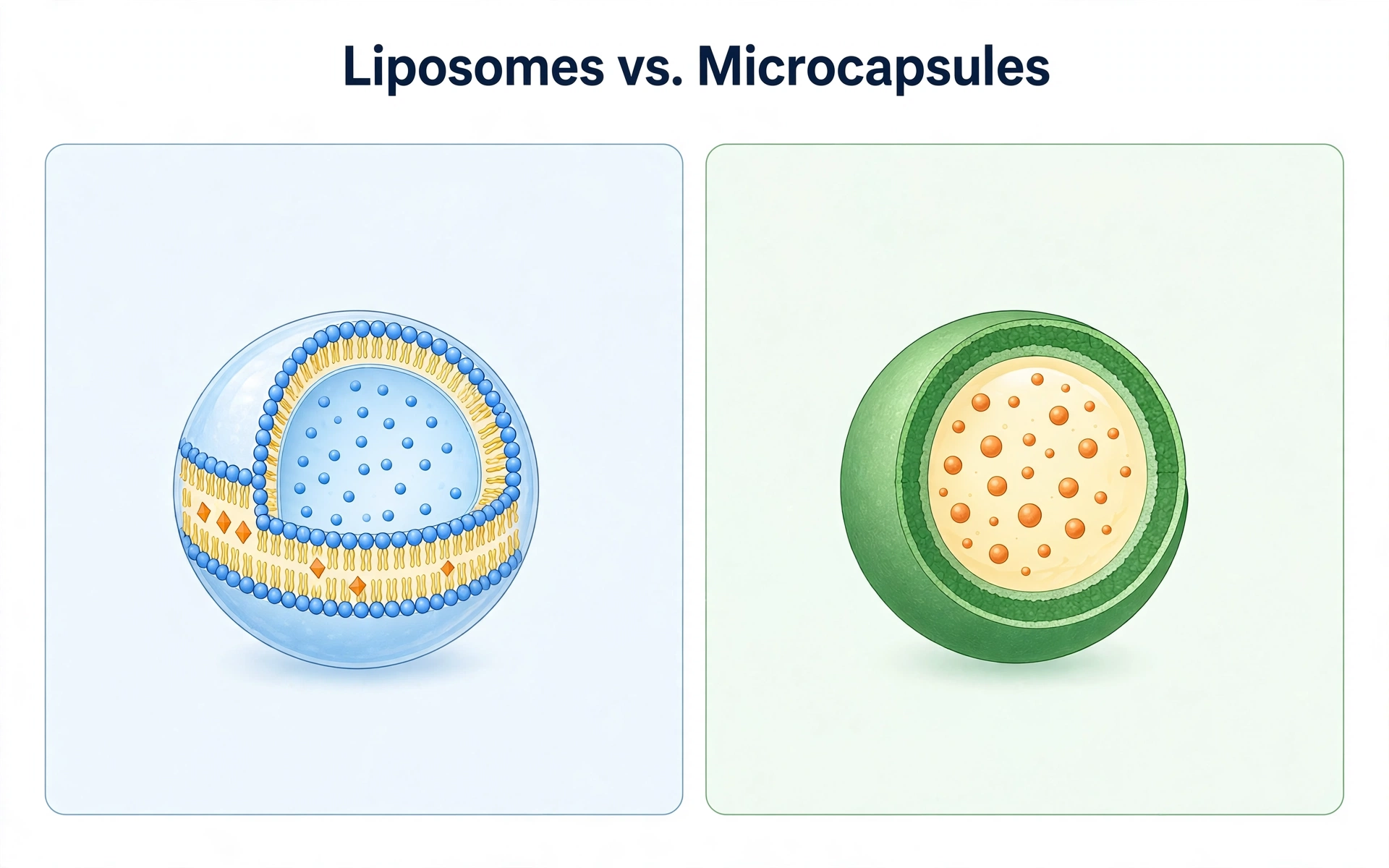
Liposomes are microscopic vesicles made up of phospholipids, which have a bilayer structure similar to cell membranes. Liposomes can encapsulate both hydrophilic and hydrophobic molecules thanks to their shape. Microcapsules, on the other hand, are tiny capsules with a polymer shell covering an active compound inside. The polymer wall can be made to release the substance at a controlled rate, which makes sure that the effects last for a long time. Picking the right system has a direct effect on how well your product works, how much it costs, and where it stands in the market. This guide breaks down both technologies in a way that is both clear and useful.
What Are Liposomal and Microencapsulated Ingredients?
Liposomal Ingredients
To protect a nutrient during processing and make it easier for the body to absorb it in the intestines, liposome technology encases it in phospholipid vesicles. These vesicles look a lot like the membranes of your cells. The biological edge they have comes from how similar they are.
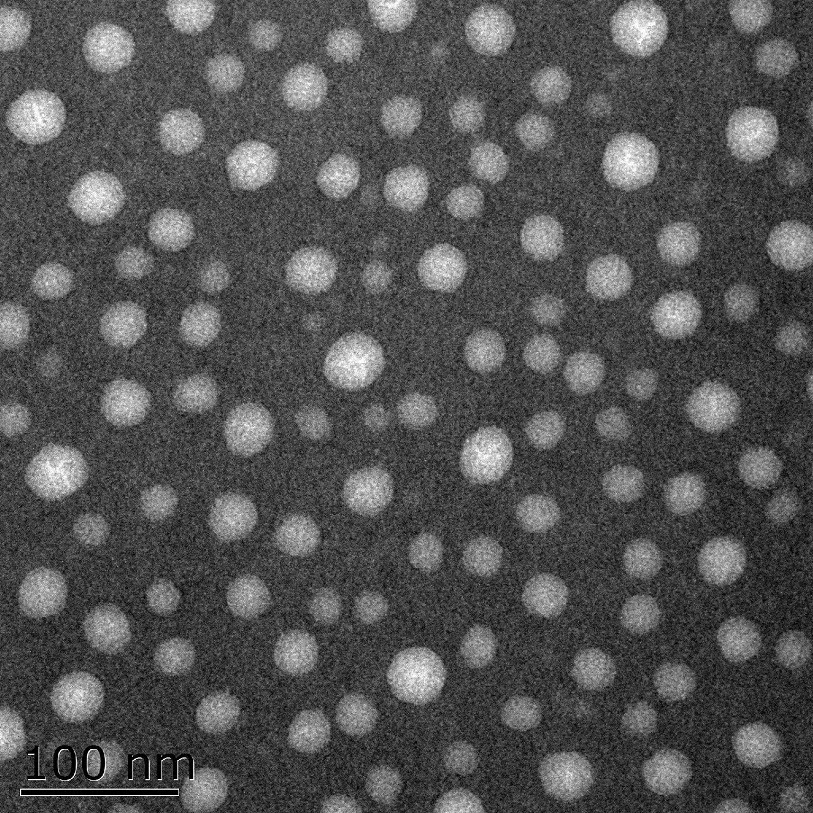
Dynamic light scattering (DLS) can show that a real liposomal product has vesicle distribution centred between 50 and 250 nm. Particle distributions in the micron range are seen in fake liposomal products.
Vitamins and other bioactive substances' bioavailability is increased by using liposomal technologies in pharmaceuticals and nutraceuticals. They work especially well with chemicals that are sensitive or hard to absorb.
Microencapsulated Ingredients
Bioactive ingredients are coated in droplets using a technique called microencapsulation technology. Around the active core is a protective shell that is usually made of polymers, proteins, or carbohydrates.
In order to protect a chemical from stomach acid and release it exactly where it is needed, such as the lower gut, microencapsulation adds a protective shell. It puts an active ingredient in a shell that protects it from stomach acid and then lets it out at the right time further down the digestive tract.
By encapsulating bioactive chemicals, increasing their half-life, avoiding sensory changes, and avoiding anti-nutritional interactions, microencapsulation can be used to enhance food and nutraceutical products.
Liposomal vs. Microencapsulated: How Do the Technologies Differ?
Structural Differences
Feature | Liposomal Technology | Microencapsulation Technology |
Shell Material | Phospholipid bilayer | Polymers, proteins, carbohydrates |
Payload Type | Hydrophilic & hydrophobic | Hydrophilic & hydrophobic |
Release Mechanism | Cell-membrane fusion | pH, temperature, enzymatic |
Manufacturing Complexity | High | Moderate |
Cost | Higher | Lower to moderate |
How Release Works?
The microcapsule's polymer wall can be made to release the substance at a controlled rate, making sure that the healing benefits last for a long time. Things like pH, temperature, or the action of enzymes can change the way the substance is released.
Different mechanisms apply to liposomal release. The phospholipid shell joins with the cell membranes of the intestines. After that, the active goes straight into the cell. The faster and higher peak plasma levels are often possible with liposomal technology because of this.
Process Complexity
Liposome technology needs careful monitoring of temperature, pH, and other factors during the preparation process, which is relatively complicated. Microencapsulation technology has a simpler preparation process, but it's still important to have precise control over particle size, wall material, and other factors.
The difference in this process is important. Liposomal products cost more to make. For the majority of supplement forms, microencapsulated products are simpler to scale and more affordable.
Bioavailability, Stability, and Ingredient Protection Compared
Bioavailability: Liposomal Technology
Bioavailability, or the amount of the nutrient that actually gets into your bloodstream and is used, is the main selling point of liposomal supplements. For certain nutrients, research shows over and over that liposomal formulations work better than traditional ones.
This is backed up by clinical studies. A study done in 2020 found that liposomal Vitamin C taken by mouth was 1.77 times more bioavailable than non-liposomal Vitamin C.
In a randomised crossover study, the liposomal multinutrient had higher C_max and iAUC values for iron, zinc, and vitamin B3 than non-liposomal comparators with the same composition.
Liposomal delivery gets around saturation and raises peak plasma levels of important nutrients like Vitamin C by 1.8 to 2.5 times at higher doses.
Bioavailability: Microencapsulation
Microencapsulated compounds may show improved nutraceutical and medicinal benefits due to changes in chemical stability against external conditions during storage, resulting in improved bioaccessibility and bioavailability after intake.
Targeted release is the primary benefit of microencapsulation. When a compound is microencapsulated, it acts very differently than when it is just absorbed and lost high up in the digestive tract. This is because the compound needs to work in the lower gut.
This is very important for chemicals that are broken down early in processing or that need to work in a certain place instead of being taken high in the gut. You can plan where the release will happen instead of leaving it up to chance.
Stability Comparison
Liposomes are sensitive to changes in temperature. High temperatures can cause changes in the lipid phase and fusion, which can cause early release.
Liposome technology and microencapsulation technology can both package or embed a substance to keep it safe from outside influences and make it more stable.
Microencapsulation, on the other hand, usually gives better shelf life stability. An analysis of the bioactives' kinetic model shows that packaging can make them much more stable. Its polymer shells are usually better at withstanding heat, light, and oxidation while being stored and processed.
Key Specifications for Comparing Ingredient Quality
Specifications Comparison Table
Quality Marker | Liposomal Ingredients | Microencapsulated Ingredients |
Wall Material Purity | Phosphatidylcholine grade | Polymer/protein food-grade certification |
Storage Stability | Refrigeration often required | Room temperature, often stable |
GMP Certification | Required | Required |
Third-Party Testing | Essential | Essential |
Why Quality Verification Matters?
It's too bad that not all products that say "liposomal" are actually liposomal. The bioavailability-best liposomal supplements are made with cutting-edge methods and put through strict testing to make sure the particles are the right size and are properly encapsulated. Researchers who have studied liposomal delivery systems have come up with important quality indicators and manufacturing standards that can be used to tell the difference between real liposomal products and fake ones.
Bioavailability is influenced by both the technology and the way it is made. This is a very important point. Without strict process control, even the best-designed delivery system will fail. Always ask your seller for proof of analysis, data on particle size, and reports on how well the product is encapsulated.
Check the type of wall material, the release profile data (pH-triggered vs. time-release), and the stable test results at the right storing temperatures for microencapsulation.
Liposomal vs. Microencapsulated Ingredients: Application Options
Where Liposomal Technology Excels?
Liposomal supplement ingredients are especially effective for:
Vitamin C - a bioavailability boost shown in studies
Glutathione - makes sure that this weak antioxidant doesn't get broken down by the digestive system
Curcumin - studies show that absorption can be greatly improved by enclosing curcumin in a fat-soluble liposome[5]
NAD⁺ precursors - clinical studies that compared liposomal NMN to standard formulations showed that liposomal NMN had much higher NAD+ blood levels and better bioavailability.
Fat-soluble vitamins (D3, K2, A, E)
Best formats: Liquid supplements, softgels, liposomal sachets, oral sprays.
Where Microencapsulation Technology Excels?
Taste hiding, increased bioavailability, better solubility, gastric release, controlled release, and stability against light, air, and pH are all benefits of microencapsulation in nutraceuticals.
Microencapsulated ingredients are ideal for:
Probiotics – protected through heat processing and GI transit
Omega-3 oils – omega-3 rich oils are among the most important and challenging functional ingredients in food and nutraceutical applications due to their susceptibility to oxidation; microencapsulation controls this effectively
Vitamins B & C in powders – taste masking and stability in bulk formats
Essential oils & botanical extracts – shields volatile actives
Best formats: Tablets, capsules, granules, gummy candies, functional food powders.
How to Choose the Right Ingredient Technology Supplier?
It's important what technology you pick. But the provider you work with is just as important. When choosing a partner for liposomal or microencapsulation technology, here are some things you should think about.
1. Manufacturing Standards: Your supplier must work in a way that is GMP-certified. Liposomal production needs environments with strict controls over temperature, pH, and cleanliness. When liposome technology is being made, temperature, pH, and other factors must be carefully controlled. Any change impacts the structure of the vesicle and the end bioavailability.
2. Quality Testing Infrastructure: Request particle size analysis (DLS for liposomal), encapsulation efficiency data, and stability study reports. The bioavailability-best liposomal supplements are made with cutting-edge methods and put through strict testing to make sure the particles are the right size and are properly encapsulated.
3. Formulation Expertise: Your supplier should understand not just production - but formulation science. Can they advise on the right delivery system for your target ingredient? Do they have in-house R&D support?
4. One-Stop Service Capability: The most efficient partners offer raw material sourcing, formulation, manufacturing, and packaging under one roof. This reduces lead times, cuts coordination costs, and ensures consistency from batch to batch.
5. Regulatory Support: Your partner should understand global market requirements. This includes FDA dietary supplement regulations, EU health claim frameworks, and relevant certification standards such as HACCP and ISO9001.
6. MOQ Flexibility and Sampling: Not every brand launches at scale. Look for partners who accommodate lower minimum order quantities and offer genuine sampling support. This lets you validate product quality before full commitment.
Conclusion
Both liposomal and microencapsulation technologies are big steps forward from the way supplements are usually delivered. For actives that are difficult to absorb, such as Vitamin C, glutathione, and curcumin, liposomal technology is at the forefront of peak bioavailability. Microencapsulation technology is great for controlled release, long shelf life, and cost-effective scaling across a wider range of formats. The best option relies on the element, the type of product you want to make, the style of the recipe, and your business goals. Working with a qualified and experienced production partner will make sure that the technology you choose works as planned, from the lab bench to the finished product. For format-specific guidance, see our comparison of spray-dried vs. liquid liposomal ingredient formats.
FAQ
Q1: What is the main difference between liposomal and microencapsulated ingredients?
To send actives to cells with high bioavailability, liposomal chemicals use a phospholipid membrane. Microencapsulated ingredients have a polymer shell that allows for targeted, controlled release. This makes them perfect for delivering nutrients to the gut and keeping them fresh in a variety of supplement forms.
Q2: Which technology offers better bioavailability for Vitamin C supplements?
Liposomal technology delivers a measurable advantage. A random experiment done in 2020 showed that liposomal Vitamin C was 1.77 times more bioavailable than regular forms. Liposomal delivery is the best way to get big doses of vitamin C into the body.
Q3: Can microencapsulated ingredients be used in gummy candies and powdered supplements?
Yes. Microencapsulation technology is well-suited to tablets, capsules, granules, powders, and gummy formats. Its polymer shell effectively hides tastes, allows controlled release, and keeps its shape, even in the hot and muggy conditions common in making gummy candies.
Q4: How do I verify that a supplier's liposomal product is genuine and not just lecithin blended with an ingredient?
Ask for data on particle size that was measured by dynamic light scattering (DLS). Liposomal products that are real have vesicle distributions that range from 50 to 250 nm. Ask for certificates of encapsulation efficiency and GMP documentation as well. Suppliers you can trust give you full analytical transparency.
Q5: Is microencapsulation or liposomal technology better for probiotic supplements?
Microencapsulation is generally preferred for probiotics. Its protective polymer shell shields live bacterial cultures from stomach acid, heat during processing, and moisture during storage — ensuring viable delivery to the lower gut where probiotics exert their primary health benefits.
Work With OriginBio - Your Trusted Supplement Manufacturer & Supplier
OriginBio is a science-driven liposomal ingredients and microencapsulated ingredients supplier, and factory with GMP-certified facilities and deep R&D expertise. We offer one-stop supplement contract manufacturing — from raw material sourcing to private label packaging. Ready to launch your brand? Contact us today: sales@originbionutra.com
OriginBio
A reliable one stop nutrition supplement contract manufacturing partner
 EN
 fr
 de
 ru











 Call us on:
 Email Us:
 Office Add:
