Capsule Supplement Manufacturing From Formula Development to Finished Bottles
For a supplement brand, capsule manufacturing is not one isolated filling step. Formula feasibility, capsule size, shell material, ingredient quality, packaging, and documentation all have to line up before a commercial batch can be released. OriginBio supports this workflow from formulation and ingredient sourcing through sampling, mass production, quality control, packaging, and delivery. Its company profile says the factory was established in 1996 and includes a 7,000 m2 health-supplement production workshop within a 30,000 m2 site.
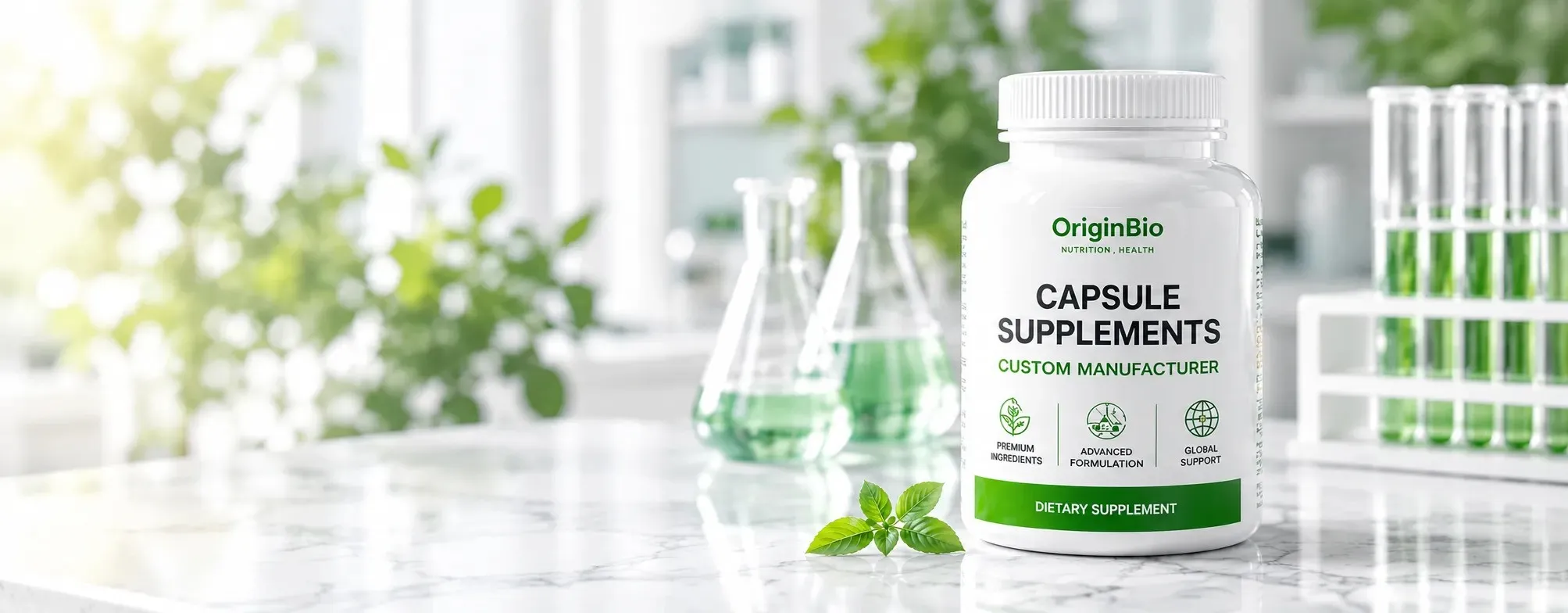
1. Start With a Clear Product Brief
A workable capsule project begins with the formula, target serving, capsule material, capsule size, shell color, packaging format, and destination market. OriginBio offers gelatin and HPMC vegetarian shells and publishes capsule sizes from #000 to #5. Because the powder capacity changes by size, the capsule format should be selected together with the dose rather than after the formula has already been fixed.
Capsule Size | Approx. Powder Capacity |
#000 | ~1,000 mg |
#00 | ~750 mg |
#0 | ~500 mg |
#1 | ~400 mg |
#2 | ~300 mg |
#3 | ~200 mg |
#4 | ~150 mg |
#5 | ~100 mg |
The published capsule program also includes custom shell colors and packaging choices. This makes it possible to review dosage, brand presentation, and pack configuration in the same project brief instead of treating them as separate decisions at the end of production.
2. Use Samples to Check the Formula Before Scale-Up
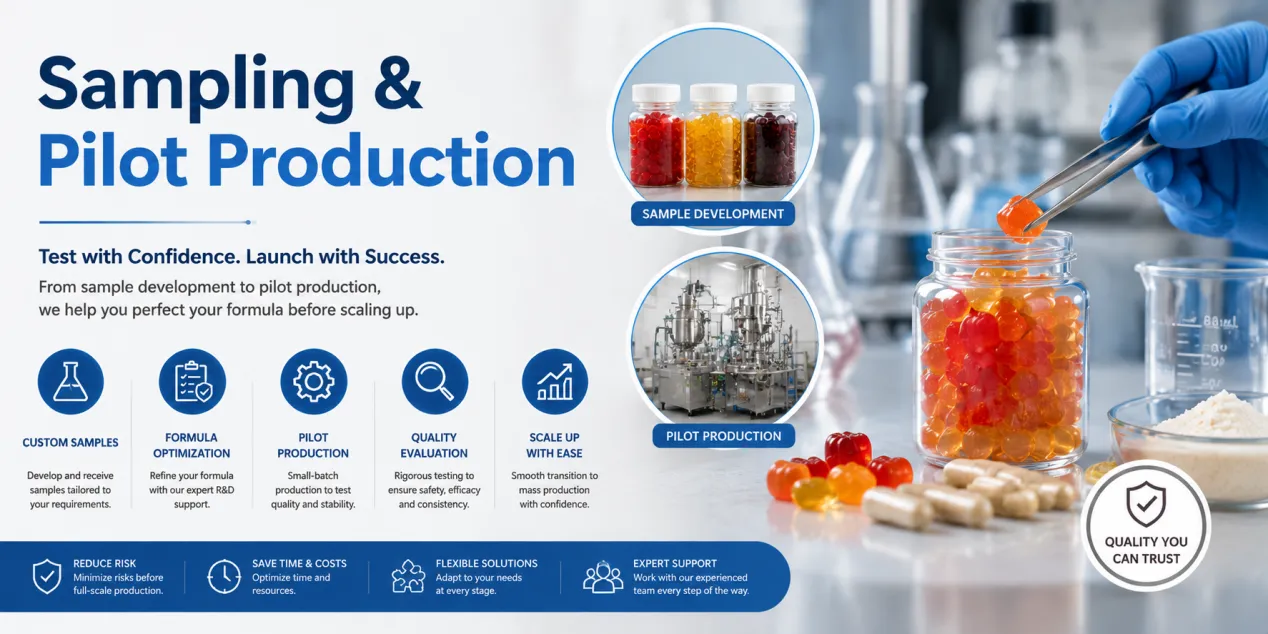
OriginBio's sampling and pilot-production services cover capsules, gummies, powders, softgels, and liquids. Small batches can be used to test ingredient combinations and dosages and to evaluate stability and packaging compatibility before commercial production. For buyers comparing organic capsules manufacturer, the sampling stage provides a practical way to confirm formula feasibility, shell requirements, packaging compatibility, and documentation before a commercial order is finalized.
Raw-material control starts before the capsule reaches the filling line. OriginBio's testing program checks identity, purity, and potency, microbiological compliance, and heavy metals before materials enter production. The published heavy-metal program includes arsenic, lead, mercury, and cadmium tested by ICP-MS. These checks connect the approved formula to defined incoming-material requirements before the commercial batch is made.
3. Move From Pilot Runs to Commercial Capsule Filling
Once the formula and sample are approved, the project moves into controlled blending, encapsulation, and in-process monitoring. OriginBio's mass-production page lists raw-material verification, in-process quality monitoring, finished-product testing, microbiological analysis, heavy-metal testing, stability testing, and packaging inspection as part of the commercial manufacturing system. The capsule platform includes hard gelatin capsules, vegetable capsules, and delayed-release capsules.
OriginBio publishes hard-capsule production capacity of 2 million capsules per day. Within a capsule supplement manufacturing project, the approved formula, shell specification, in-process controls, and finished-product release requirements should remain aligned from batch preparation through packaging.
4. Build Quality Documentation Into the Release Process
Finished-product review is more than a visual inspection. OriginBio lists content uniformity, identity, potency, purity, microbiological testing, heavy-metal testing, stability testing, and manufacturing-quality controls among its published checks. Its documentation service states that each production batch is accompanied by a Certificate of Analysis covering active ingredient content, physical and chemical properties, microbiological results, heavy metals, batch number, manufacturing date, and shelf-life information.
Additional documentation can include product and ingredient specifications, stability reports, third-party testing, heavy-metal and microbiological reports, allergen statements, non-GMO statements, BSE/TSE statements, and country-of-origin documents, depending on the project. For dosage planning, OriginBio's published size 0 capsule capacity reference can also help buyers connect the target fill requirement with a practical shell-size discussion before the final packaging and label details are approved.
5. Match Packaging, MOQ, and Lead Time to the Commercial Plan
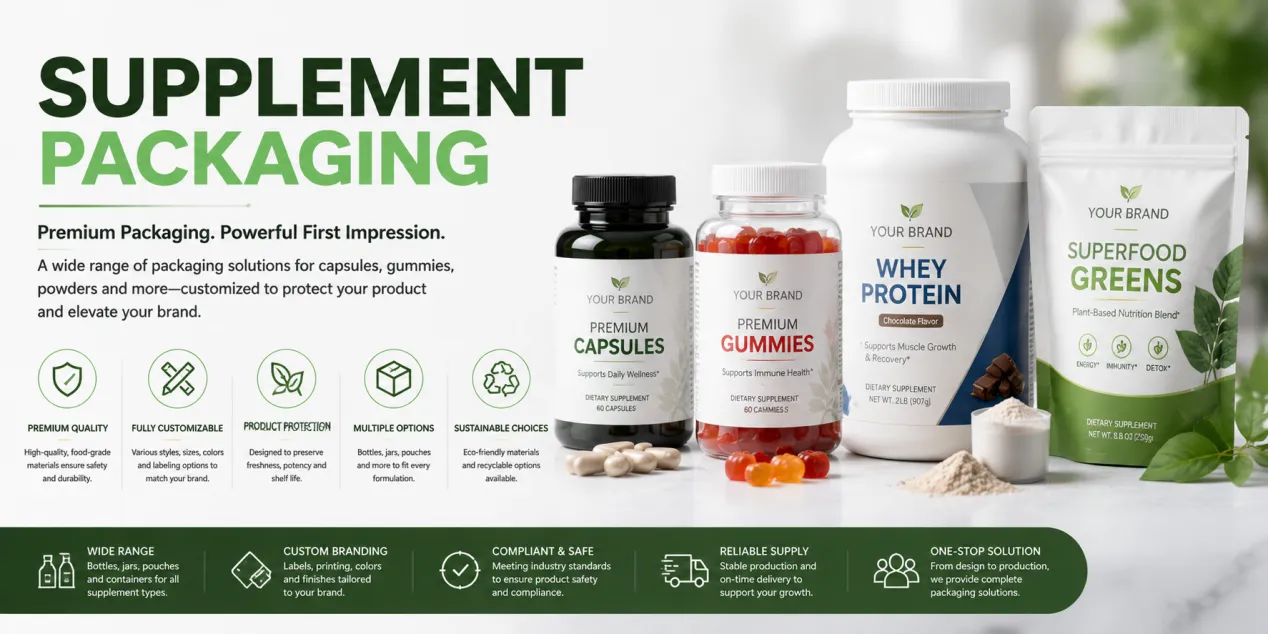
OriginBio lists PET, HDPE, and amber bottles, pouches, sachets, blister packs, cartons, and other retail packaging. Bottle options can include child-resistant caps, tamper-evident seals, and induction sealing. Its packaging service also covers label design and layout, logo placement, brand-color integration, ingredient and product-information formatting, barcode generation, packaging-material sourcing, filling, and final quality checks.
For custom capsules, OriginBio states that the standard MOQ typically starts at 300,000 capsules per run. The same capsule page gives general lead times of 8–12 weeks for a first-time custom order from formula finalization to shipment and 6–8 weeks for re-orders, with timing varying according to formula complexity and material availability. Warehousing and delivery options include courier, air, and sea freight, and export-documentation support is available for international distribution.
6. What to Include in a Capsule Manufacturing RFQ
A useful request for quotation should give the manufacturer enough information to evaluate the formula and the commercial pack at the same time. For an OriginBio capsule project, that means identifying the target formula, approximate dose, preferred capsule material and size, bottle or blister preference, expected order quantity, target market, and any required certification or documentation. If a brand plans custom colors, special closures, induction sealing, or export paperwork, those items should also be included before the quote is finalized. This reduces the risk of comparing two quotations that cover different packaging or documentation scopes and makes the published MOQ and lead-time guidance more meaningful for the actual project. It also gives the formulation, packaging, and QA teams one consistent specification to review before samples or commercial materials are ordered.
What This Means for a Capsule Brand
A capsule project is easiest to manage when formula, shell, capsule size, testing, packaging, and documentation are decided as one manufacturing system. OriginBio's published process gives brands a defined path from product brief and sample development to commercial encapsulation, batch release, and finished packaging. That structure is particularly useful for B2B buyers that need a manufacturer to support both technical development and private-label execution without separating the project into multiple suppliers.
OriginBio
A reliable one stop nutrition supplement contract manufacturing partner
 EN
EN
 fr
fr  de
de  ru
ru 








 Call us on:
  Email Us:
  Office Add: