LUTEIN MICROENCAPSULATION -- Improving Bioavailability, Stability and Water Dispersibility
Microencapsulation addresses several practical challenges of carotenoids like lutein, zeaxanthin and Meso-Zeaxanthin delivery systems , including sensitivity to environmental degradation, poor water dispersibility and limited absorption.
Lutein, Zeaxanthin and Meso-Zeaxanthin in Eye Health
Lutein is one of the major pigments found in the macular region of the human retina. It can absorb potentially damaging wavelengths of blue light, thereby contributing to the protection of the eyes.
Zeaxanthin is an isomer of lutein. Together, lutein and zeaxanthin constitute the macular pigments of the retina and play an important role in maintaining eye health. Their concentrations are highest in the center of the macula, reaching approximately 0.1–1 mmol/L.
Meso-Zeaxanthin (MZ) is a key component concentrated in the central region of the macula. Its level is closely associated with central visual performance and the antioxidant capacity of the retina. Because the human body's capacity to produce MZ is limited and natural dietary sources contain relatively small amounts, supplementation provides an additional source of MZ.
One of the key characteristics of lutein and zeaxanthin is their ability to cross the blood-brain and blood-retinal barriers and accumulate in important functional regions of the eye and brain, including the retinal macula, hippocampus, frontal cortex and occipital cortex. These regions are closely associated with visual processing, learning and memory. Lutein accounts for more than 65% of total carotenoids in the brain, according to the reference cited in the source material.[1]
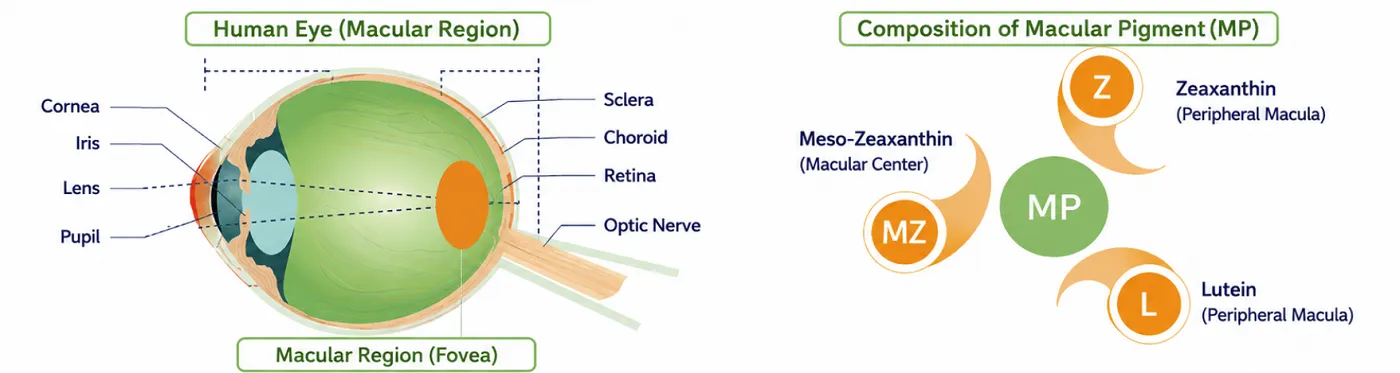
Distribution of macular pigments, including lutein, zeaxanthin and Meso-Zeaxanthin.
Why Microencapsulation Matters for Carotenoids
Carotenoid ingredients face several formulation challenges, including susceptibility to degradation, poor water solubility and limited absorption. Microencapsulation provides an effective solution by creating a protective barrier between the active ingredient and the external environment, helping reduce environmental degradation and improve storage stability.
According to the experimental data presented in the source material, microencapsulation significantly increased cellular uptake of lutein and Meso-Zeaxanthin and improved their bioavailability. The source text reports increases of approximately 3.6-fold and 3.5-fold, respectively.
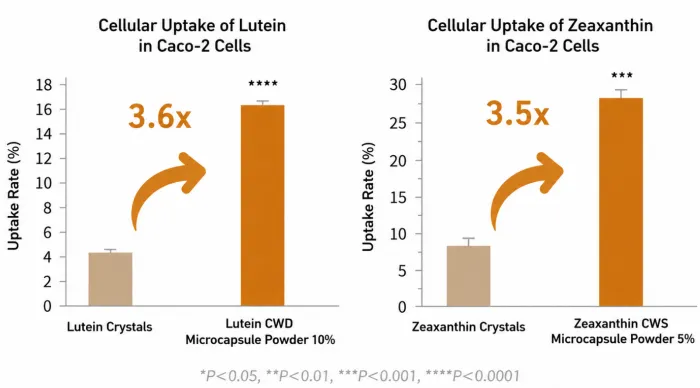
Cellular uptake comparison presented in the source material. Note: the chart labels and the source text report slightly different fold-change values.
Microencapsulation is a sophisticated formulation system. Through careful selection and molecular design of film-forming wall materials, a precise physical and chemical barrier is constructed around lipid-based particles. The resulting structure can be compared to an “egg,” in which the wall material surrounds and protects the core material.
Modify the physical state of sensitive ingredients
Provide isolation and protection from the external environment
Support controlled-release concepts where appropriate
Mask undesirable taste or sensory characteristics
How Microencapsulation Improves Meso-Zeaxanthin Performance
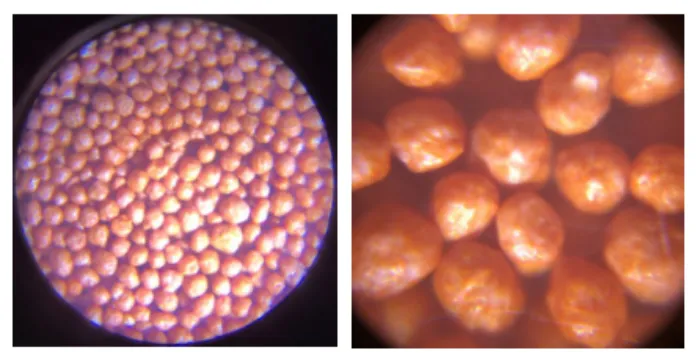
Microcapsule morphology under high-magnification microscopy.
Two Key Advantages
Improved water dispersibility and cellular uptake. Meso-Zeaxanthin is encapsulated into very small particles, improving its water dispersibility and facilitating interaction with intestinal epithelial cells.
Protection of the active ingredient. The wall material creates a protective barrier that helps reduce oxidative degradation of MZ in the gastrointestinal environment and maintain ingredient activity.
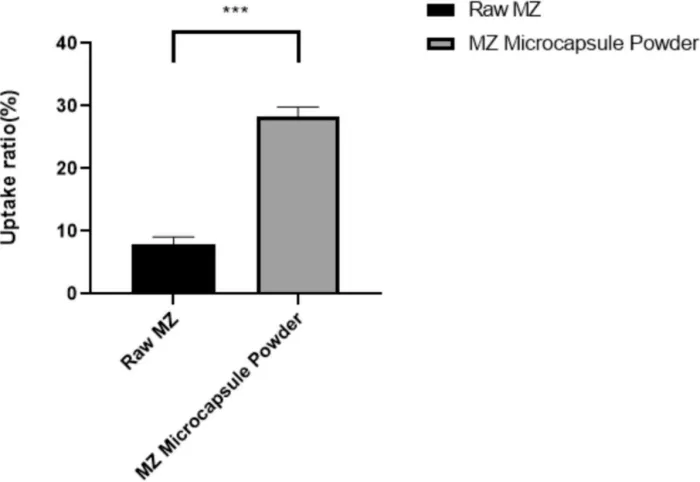
Caco-2 cellular uptake comparison: raw MZ versus MZ microcapsule powder.
In Vivo Bioavailability of Microencapsulated Meso-Zeaxanthin
The results were further evaluated in a bioavailability study using SD rats. Following oral administration of MZ microcapsule powder, the peak plasma concentration of zeaxanthin reached 15.427 μg/L, representing a 63.9% increase compared with unprocessed MZ.
The 0–24-hour area under the plasma concentration-time curve (AUC₀–₂₄) reached 137.48 μg/L·h, equivalent to 131% of the value observed in the unprocessed MZ group.
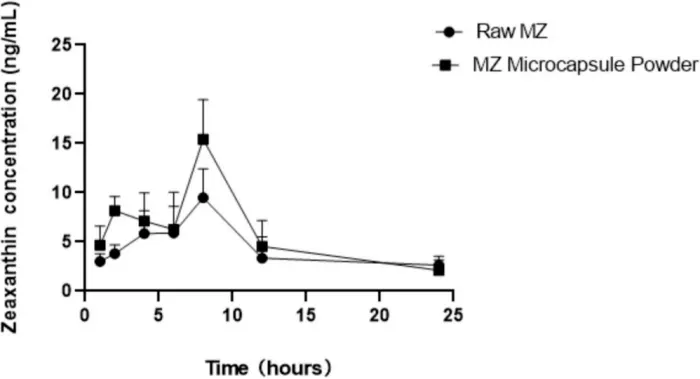
Plasma zeaxanthin concentration-time profile after a single oral dose in SD rats.
These findings indicate that microencapsulation can significantly improve the absorption and systemic exposure of Meso-Zeaxanthin.
Water-Dispersible and RTD Solutions for Lutein
Beyond bioavailability, microencapsulation can also address practical formulation challenges in water-dispersible and ready-to-drink (RTD) applications. Depending on formulation requirements, selected nutrients can be encapsulated using protein-based, starch-based, low-GI or other wall-material systems.
This allows ingredients that are traditionally difficult to incorporate into aqueous systems to be adapted for a broader range of beverage and instant-drink applications.
Lutein Ester RTD Microcapsule Powder
The lutein ester RTD microcapsule powder described in the source material demonstrates rapid dispersion in both cold and hot water. After 30 minutes of sterilization at 90°C, more than 90% of the lutein ester content was retained. The dispersion remained stable, with no visible phase separation, floating oil or sedimentation.
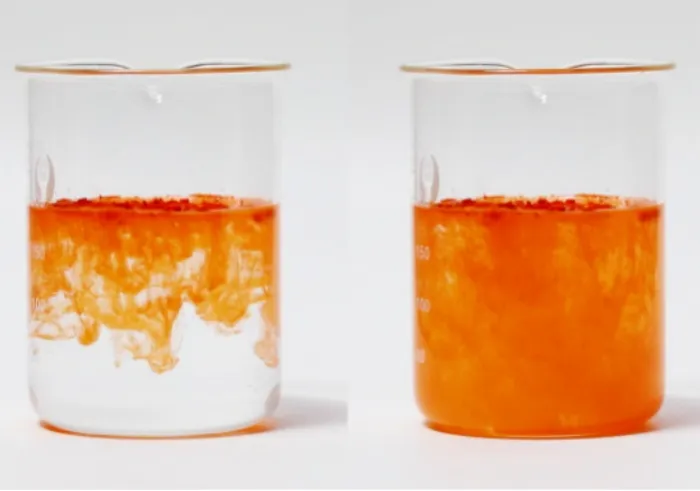
Visual comparison of dispersion performance in water.
This helps address common challenges in instant and beverage products, such as wall adhesion and turbidity, while supporting a smoother and cleaner sensory experience.
Enhanced Stability for Lutein Ester Beadlets
For lutein ester beadlets, a double-layer encapsulation technology provides an additional protective structure around the active ingredient. According to the stability data presented in the source material, the product retained more than 90% of its active content after 36 months.
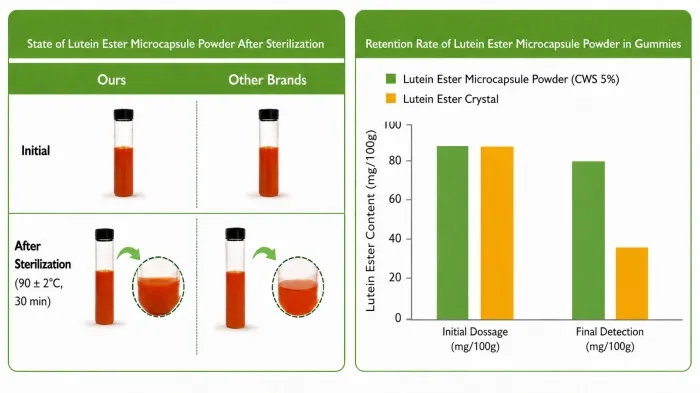
Stability comparison for microencapsulated lutein ester powder
These properties help reduce undesirable tablet appearance issues and support the transition from functional ingredient to high-quality finished product.
Multiple Delivery Formats for Different Product Applications
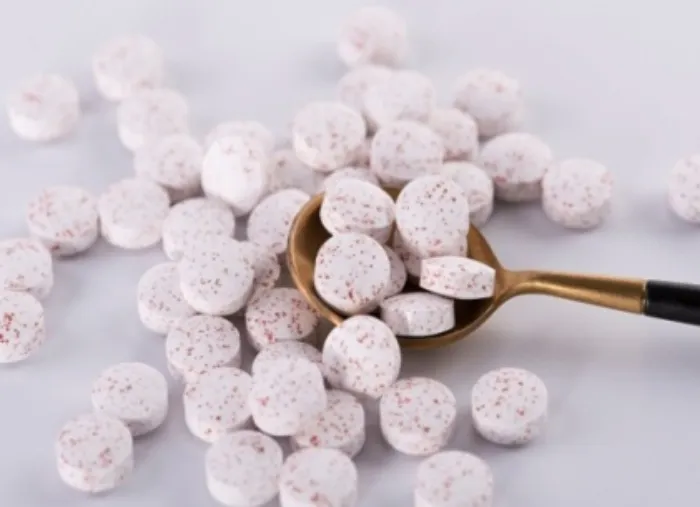
A mature carotenoid delivery platform should not be limited to a single ingredient format. The technologies described in the source material support a range of formats:
Oil Suspensions | Microcapsule Powders | Beadlets | RTD Microcapsule Powders |
These ingredient formats can be customized for different finished-product applications, including softgels, hard capsules, tablets, gummies, liquid beverages and powdered beverages.
By selecting the appropriate encapsulation technology, wall-material system and ingredient format, brands can develop lutein and zeaxanthin products that better balance stability, bioavailability, processing performance and finished-product requirements.
Developing a Lutein or Zeaxanthin Product?
OriginBio supports customized carotenoid ingredient formats and finished-product applications, including microcapsule powders, beadlets, RTD systems, capsules, tablets, gummies and beverage solutions.Contact us to get more information.
OriginBio
A reliable one stop nutrition supplement contract manufacturing partner
 EN
EN
 fr
fr  de
de  ru
ru 






 Call us on:
  Email Us:
  Office Add: