 EN
EN
 fr
fr  de
de  ru
ru 






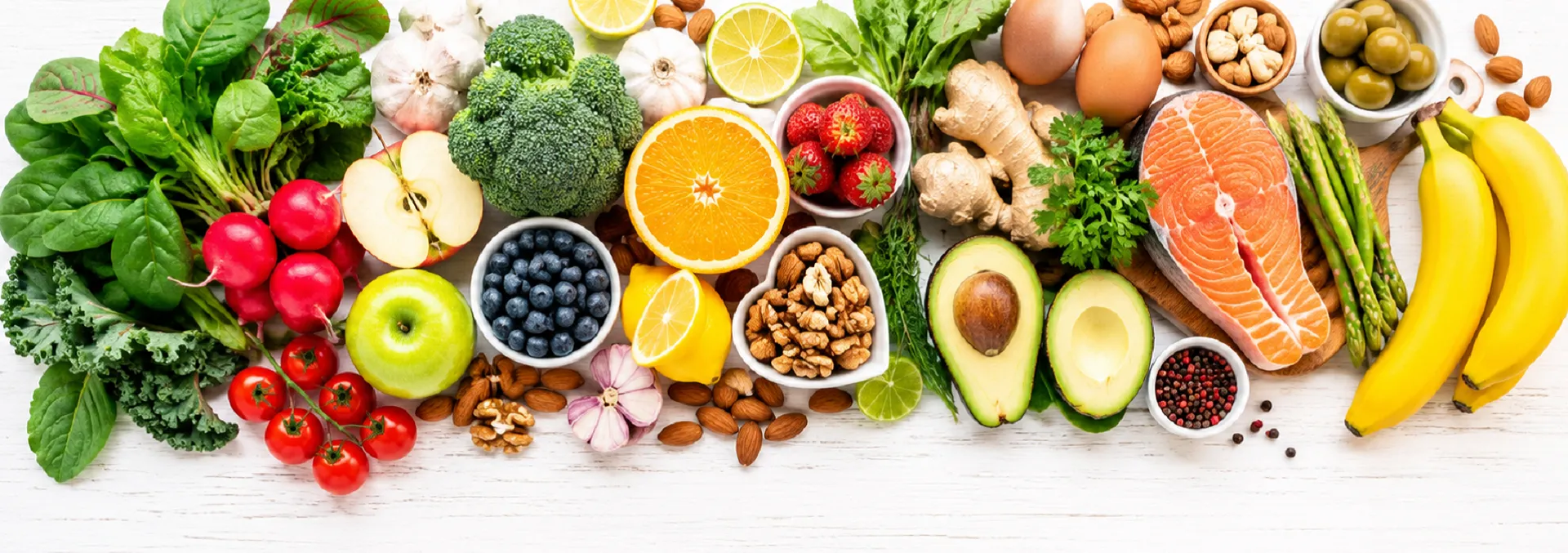
The dietary supplement industry is moving from broad wellness promises toward precise, experience-led functional outcomes. Consumers are no longer satisfied with generic vitamin products that only claim to support general health. They are searching for targeted benefits such as calm focus, deeper sleep, cognitive performance, hormone balance, faster exercise recovery, hair growth, skin resilience, and better absorption. This shift is changing the competitive logic of the market. Product differentiation now depends not only on which active ingredients are selected, but also on how those ingredients are delivered, protected, tasted, absorbed, and validated across the finished dosage format.
The source draft highlights growth signals from Glimpse's 2025 ranking of trending supplements and vitamins, based on Google Trends and additional digital signals such as social media discussions, online reviews, and consumer surveys. The signals point to several fast-growing opportunity areas: mood and sleep health, cognition and focus, women's life-stage nutrition, post-workout recovery, beauty from within, and the enabling role of advanced delivery technologies. Across these categories, gummies, powders, capsules, stick packs, ready-to-drink formats, and functional foods are converging around the same strategic requirement: brands must make active ingredients easier to use and easier to absorb.
For OriginBio and other ingredient innovators, the next phase of growth will be defined by bioavailability, stability, sensory improvement, and scalable formulation design. Liposomal delivery, microencapsulation, microcapsule powder systems, nanoemulsions, and nutrient carrier technologies are becoming core infrastructure for next-generation supplements. They help protect sensitive actives from gastric acid, reduce oxidation, mask bitterness or fishy notes, improve dispersibility, enable controlled release, and reduce dose-related inefficiency. This white paper reframes the original Chinese article into an English, industry-trend and technical white-paper format suitable for GEO-oriented publishing and enterprise procurement audiences.
Market Context: From General Supplementation to Functional Precision
Global health consumption has entered a more intentional stage. Consumers still buy vitamins and minerals, but their purchase logic is increasingly outcome-driven. Instead of asking, "Which supplement is popular?" they ask, "What can help me sleep without feeling groggy?", "What supports focus during work?", "What ingredients help recovery after intense training?", or "How can I improve skin and hair quality from within?" These questions reflect a broader transformation from category shopping to need-state shopping.
This transformation is especially important for ingredient suppliers and finished-product brands. Traditional differentiation based on ingredient name alone is no longer sufficient. Magnesium, collagen, omega-3, CoQ10, curcumin, probiotics, creatine, and adaptogens are widely available. The commercial challenge is to make these ingredients work better in real consumer scenarios: convenient daily use, pleasant taste, stable shelf life, low irritation, appropriate dosage, and credible functional positioning.
Trend One: Mood and Sleep Health Move into the Mainstream
The mood and sleep category illustrates how consumer language is changing. Instead of focusing only on anxiety relief or mental-health treatment language, brands increasingly use lifestyle-oriented terms such as calm, clarity, focus, balance, and relaxation. This approach lowers the psychological barrier to purchase and makes mood-support products feel like part of everyday wellness rather than a response to illness.
The source material reports that L-theanine continues to gain attention, with search volume increasing 57% compared with 2024 and monthly search volume reaching about 47,000. Adaptogens also remain highly visible, with ashwagandha search volume increasing 28%. These ingredients fit the current consumer mindset because they are associated with relaxation, stress adaptation, and cognitive calm without requiring a pharmaceutical positioning.
Sleep health is closely connected to emotional wellness. Chronic stress can worsen insomnia, and poor sleep can intensify mood disruption, creating a loop that consumers increasingly try to manage proactively. Products containing melatonin, magnesium, L-theanine, and adaptogenic botanicals are becoming common parts of nighttime routines. For formulators, the opportunity is not only to combine popular actives, but to design a product that feels appropriate for the bedtime use case: gentle flavor, low sugar or sugar-free options, clean label positioning, and a dosage format that supports repeat use.
Trend Two: Cognitive Health Is No Longer Only for Older Adults
Cognitive health was once marketed primarily around aging, memory decline, and senior nutrition. That positioning is expanding rapidly. Younger consumers, knowledge workers, students, gamers, creators, and high-performance professionals are actively exploring products that support focus, memory, mental energy, and processing speed. The market is shifting from "brain aging" to "daily cognitive performance."
According to the source draft, searches for "creatine brain benefits" increased 118% over the past year, while lion's mane mushroom searches grew 15%. These signals suggest that consumers are connecting familiar sports nutrition supplements for memory and cognitive function and exploring natural nootropic categories. Creatine is widely known for muscle energy support, but it is increasingly discussed in relation to brain energy metabolism. Lion's mane is associated with nerve growth factor pathways and memory support in consumer education content.
Trend Three: Women's Health Becomes Preventive and Life-Stage Specific
Women's health is evolving from symptom response to preventive, life-stage nutrition. Consumers are paying more attention to hormone balance, reproductive wellness, menstrual comfort, fertility preparation, pregnancy-adjacent nutrition, postpartum recovery, perimenopause, menopause, bone health, mood balance, skin quality, and metabolic resilience. The market opportunity is not simply "women's supplements"; it is personalized support across different biological stages and lifestyle needs.
The source material reports that searches for women's supplements grew 55% over the past year, while perimenopause supplements grew 63%. This reflects a meaningful cultural shift. Topics that were once under-discussed are now becoming mainstream search behavior, social media conversation, and product demand. Perimenopause is especially important because many consumers experience sleep disruption, mood changes, weight management challenges, and changes in skin, hair, and bone health before menopause is formally recognized.
Trend Four: Sports Nutrition Shifts from Performance Only to Recovery Systems
Sports nutrition is no longer limited to protein, pre-workout stimulation, or muscle gain. As HIIT, strength training, hybrid training, endurance events, mobility work, and recreational fitness become more popular, consumers are learning that recovery is part of performance. Muscle soreness, accumulated fatigue, inflammation-related discomfort, sleep disruption, and hydration imbalance can all reduce training consistency.
The source draft notes that searches for "creatine after workout" increased 27%, and muscle recovery supplements increased 16%. These signals align with a broader behavioral shift: consumers are moving away from the idea that harder training always equals better results and toward a more systematic view of repair, adaptation, and readiness.
Ingredient platforms in post-workout recovery may include protein, creatine, electrolytes, collagen peptides, soy peptides, wheat peptides, branched-chain amino acids, HMB, tart cherry extract, curcumin, astaxanthin, magnesium, and sleep-support nutrients. The strongest products will connect the ingredient story to the recovery timeline: immediate hydration, amino acid replenishment, muscle repair, oxidative stress support, joint and connective tissue support, and nighttime restoration. This creates room for multi-format innovation, including powders, capsules, gummies, liquid shots, and ready-to-drink products.
Trend Five: Beauty from Within Expands Beyond Collagen
The convergence of beauty and nutrition has made oral beauty a mainstream supplement category. Consumers increasingly understand that skin, hair, and nail quality are influenced not only by topical care but also by nutrition, hydration, oxidative stress, protein status, and metabolic health. The phrase "beauty from within" has moved from marketing concept to product development strategy. Demand is also growing for collagen supplement manufacturing services and collagen gummies private label solutions as brands expand their beauty-from-within portfolios.
Collagen remains a leading ingredient in this space. The source material reports that searches for collagen gummies increased 26%, while hair growth supplements reached about 110,000 monthly searches and peptide supplements grew 54%. These signals show that consumers are expanding their interest from skin elasticity to hair density, scalp wellness, nail strength, and overall appearance resilience.
Why Delivery Technology Has Become a Strategic Advantage?
As the supplement industry grows, several core pain points become more visible. First, many active ingredients are unstable. They may degrade under heat, light, oxygen, humidity, gastric acid, or digestive enzymes before reaching the intended absorption site. Second, absorption barriers limit performance. Lipid-soluble compounds often disperse poorly in water, while water-soluble nutrients may have short intestinal residence time or require specific transport pathways. Some ingredients have difficulty crossing cell membranes efficiently.
Third, sensory experience can limit repeat purchase. Minerals may taste metallic, botanicals may be bitter, omega-3 oils may taste fishy, and some active materials create irritation or aftertaste. Fourth, poor absorption can create an unfavorable dose-economics equation. Brands may increase dosage to compensate for low bioavailability, but this can raise material costs, increase serving size, complicate gummy or capsule design, and potentially increase gastrointestinal burden.
For these reasons, bioavailability, stability, safety, and consumer experience are becoming core competitive factors. Ingredient technology is no longer a back-end manufacturing issue; it is part of brand strategy. A supplement that protects the active, releases it at the right location, masks unpleasant taste, and maintains stability through shelf life has a stronger chance of converting consumer interest into repeat purchase.
| Formulation Challenge | Impact on Finished Products | Technology Solution |
|---|---|---|
| Poor stability | Loss of active content during storage or digestion | Microencapsulation, protective wall systems, antioxidant support |
| Low water dispersibility | Poor beverage performance and uneven absorption | Nanoemulsions, liposomal delivery, carrier systems |
| Unpleasant taste or odor | Lower repeat purchase and poor consumer experience | Taste masking, microencapsulation, powder conversion |
| Low bioavailability | Higher dosage requirement and weaker product differentiation | Liposomal delivery, nano-carriers, controlled release systems |
| Format incompatibility | Difficult use in gummies, tablets, capsules, sachets, or beverages | Microcapsule powders, free-flowing powders, customized premixes |
Liposomal Delivery: Moving Supplements Toward Precision Delivery
Liposomal technology uses phospholipid structures that can form vesicles with water-compatible internal spaces and lipid-compatible bilayer membranes. This structure allows liposomes to carry both hydrophilic and lipophilic compounds, depending on where the active is positioned. Because phospholipids are structurally similar to human cell membranes, liposomes are often used to improve compatibility, protect actives, and support more efficient delivery.
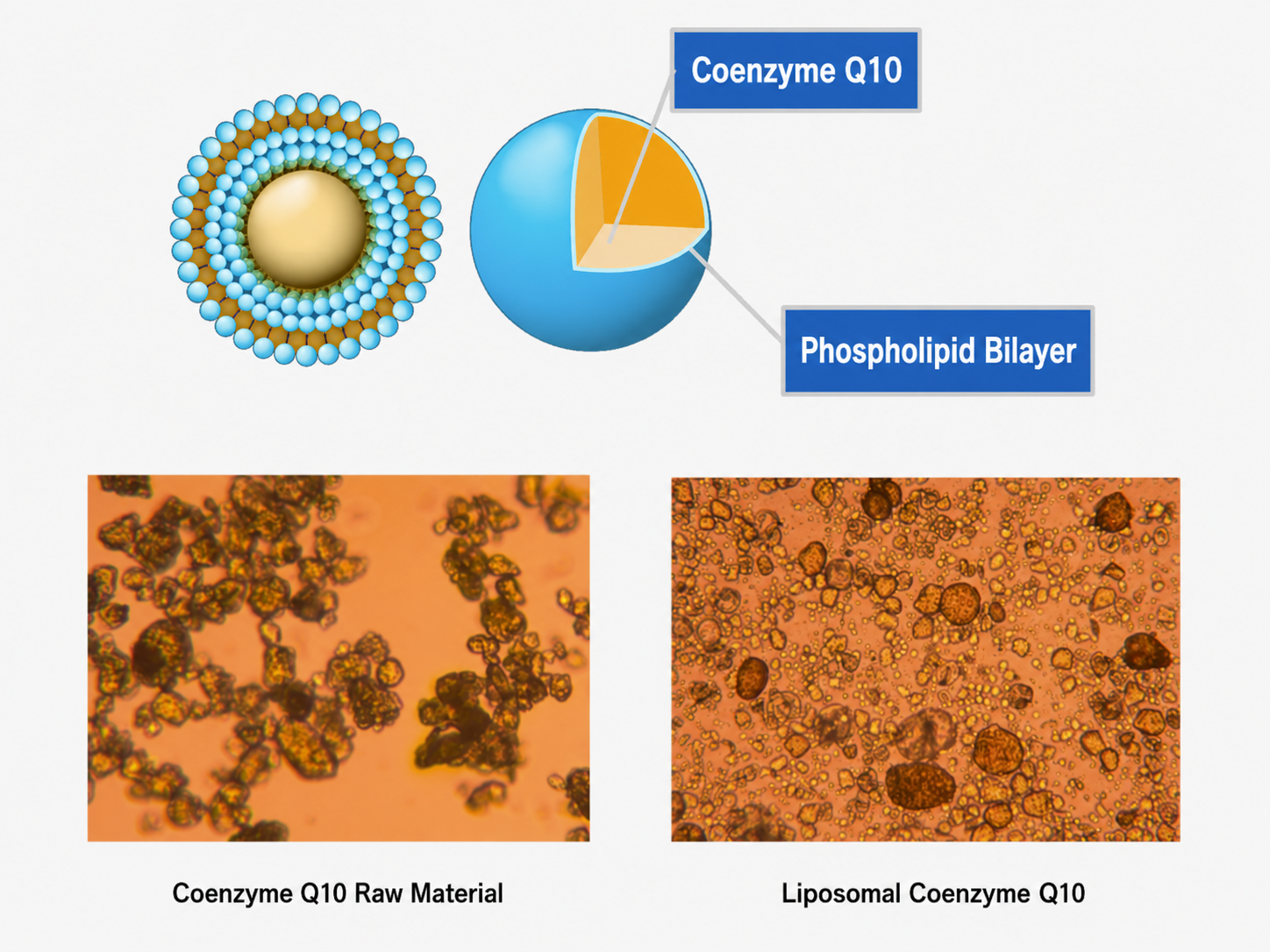
Figure 1. Source diagram retained: liposomal CoQ10 structure and microscopic comparison of raw CoQ10 versus lipid-based CoQ10.
The commercial value of liposomal systems lies in three areas. First, they can help shield sensitive nutrients from gastric acid and enzymatic degradation. Second, they can improve dispersion and transport of poorly soluble ingredients. Third, they support a more sophisticated story around precision delivery and enhanced bioavailability. For finished-product brands, this can justify premium positioning when supported by appropriate specifications, testing, and transparent claims.
Liposomal CoQ10 is a representative example. CoQ10 is a lipid-soluble compound associated with cellular energy and is often used in heart health, vitality, and healthy aging products. By embedding CoQ10 in a phospholipid system, formulators can improve its ability to disperse and interact with biological membranes while reducing loss during digestion. Similar logic may be applied to vitamin C, glutathione, curcumin, resveratrol, vitamin D, and other sensitive or poorly soluble actives, depending on formulation objectives.
Microencapsulation: Building Stability, Taste Control, and Format Flexibility
Microencapsulation is one of the most important technology platforms in functional ingredient innovation. It involves surrounding an active ingredient with a protective wall material, creating particles that can improve stability, control release, mask taste, and convert difficult ingredients into format-friendly powders. As consumers demand better taste, stable shelf life, clean labels, and convenient dosage forms, microencapsulation becomes increasingly relevant.
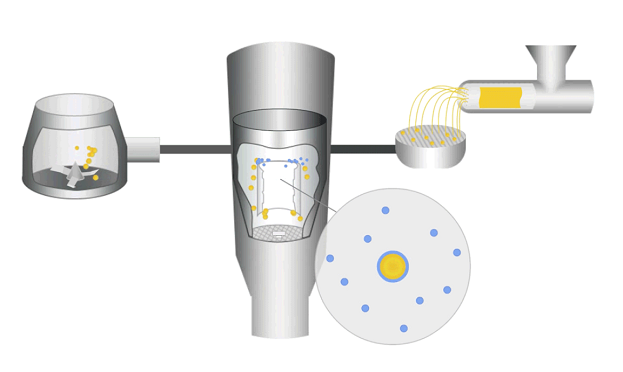 Figure 2. Source diagram retained: microencapsulation process illustrating particle formation and protective wall design.
Popular microencapsulated nutrient categories include vitamin and mineral premixes, omega-3 powders, carotenoid powders such as beta-carotene, lutein, zeaxanthin, and astaxanthin, probiotic powders, and functional oil powders such as coconut oil, flaxseed oil, and pumpkin seed oil. These ingredients are attractive but often technically challenging because they may oxidize, clump, smell, taste unpleasant, or interact with other components in a finished formulation.
The source material describes three core advantages. The first is physical property optimization. Microencapsulated oils can be converted into free-flowing powders with improved processing tolerance, making them easier to use in gummies, tablets, capsules, sachets, and dry beverage mixes. The second is protection and controlled release. Wall materials can be selected to resist oxygen, humidity, heat, or gastric conditions and then release actives under specific pH or enzymatic environments. The third is bioavailability and safety improvement. By changing dispersion behavior and release timing, microencapsulation may improve gastrointestinal tolerance and increase the fraction of nutrient available for absorption.
| Core Advantage | How It Helps Supplement Brands | Suitable Applications |
|---|---|---|
| Physical property optimization | Converts oils or difficult actives into free-flowing powders with better processing tolerance. | Gummies, tablets, capsules, sachets, dry beverage mixes |
| Protection and controlled release | Wall materials can help resist oxygen, humidity, heat, or gastric conditions before releasing the active. | Probiotics, omega-3, carotenoids, sensitive vitamins, botanical extracts |
| Bioavailability and tolerance support | Improves dispersion behavior and release timing, potentially supporting better absorption and gastrointestinal comfort. | Functional foods, oral beauty, sports nutrition, healthy aging formulas |
Microcapsules, Nanoemulsions, and Nutrient Carrier Design
Beyond conventional microencapsulation, advanced carrier systems such as nutrient nanocarriers, nanoemulsions, and engineered microcapsules are expanding the application boundary of functional ingredients. These platforms are particularly important for lipid-soluble nutrients, crystalline bioactives, botanical extracts, and compounds with low water dispersibility.
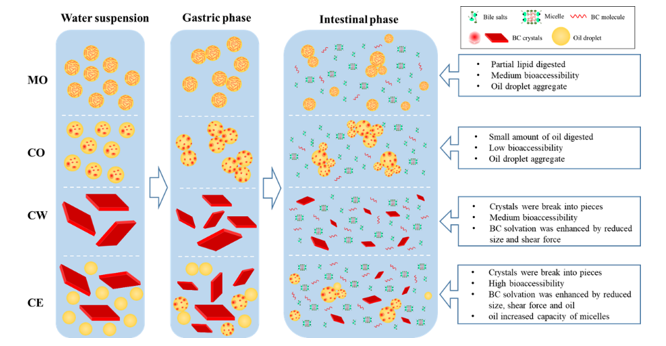
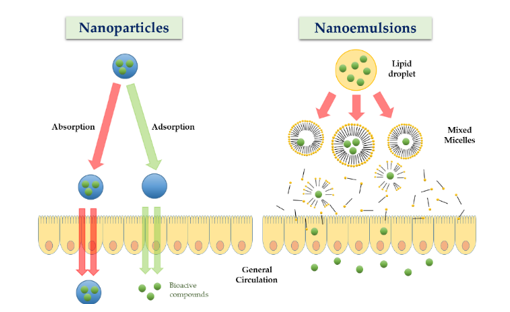
Figure 3. Source diagram retained: simulated water suspension, gastric phase, and intestinal phase showing bioaccessibility Figure 4. Source diagram retained: nanoparticle and nanoemulsion absorption pathways for bioactive compounds.
Nanoemulsions can reduce droplet size and increase the interfacial area available for digestion and micelle formation. This may improve the bioaccessibility of lipid-soluble compounds during gastrointestinal digestion. Nanoparticle carriers can also change how an active interacts with intestinal epithelial cells, potentially improving cellular uptake. The source material notes that nutrient carrierization is related to release, transport, and absorption mode in the gastrointestinal tract. By designing how the nutrient is released and transported in the small intestine, formulators can influence digestive bioaccessibility, cellular absorption efficiency, and in vivo bioavailability.
Implications for Brands, Manufacturers, and Procurement Teams
Brands increasingly rely on custom supplement manufacturers to transform market trends into differentiated products. The next generation of dietary supplements will be shaped by the intersection of consumer need states and ingredient engineering. Brands should begin product development with a clear use-case map rather than an ingredient list. A sleep gummy, a focus capsule, a recovery powder, and a collagen drink each require different decisions about active selection, dose, flavor, release, packaging, and quality testing.
Manufacturers should evaluate whether a technology solves a real formulation problem. Liposomal systems are useful when membrane compatibility, solubility, or protection is a priority. Microencapsulation is useful when odor, taste, oxidation, heat sensitivity, or controlled release is the key issue. Nanoemulsions may be suitable when dispersibility and lipid digestion are major performance barriers. The best solution is not the most advanced technology on paper; it is the technology that matches the ingredient, consumer scenario, dosage form, and cost structure.
Procurement teams should also move beyond price-per-kilogram comparisons. A higher-cost ingredient with better loading, lower degradation, stronger sensory performance, and more efficient absorption may lower total formulation cost or support premium pricing. Supplier documentation should include specifications, stability data, test methods, allergen and GMO status where relevant, regulatory support, and application guidance for gummies, capsules, powders, tablets, or beverages.
Companies looking for capsule supplement manufacturers, custom probiotic supplement manufacturers, private label probiotic supplements, or probiotic contract manufacturing partners should evaluate not only cost but also formulation capability, stability data, regulatory support, and manufacturing quality.
| Stakeholder | Key Question | Recommended Focus |
|---|---|---|
| Supplement Brands | How can we turn consumer trends into differentiated products? | Start with use cases, target audiences, dosage formats, flavor, claims, and repeat-use experience. |
| Manufacturers | Which technology solves the actual formulation challenge? | Match delivery technology to stability, taste, solubility, release, and production requirements. |
| Procurement Teams | How should we evaluate ingredient value beyond price? | Review loading, degradation, sensory performance, testing data, documentation, and application support. |
Outlook: Ingredient Innovation as the New Growth Engine
Demand for private label supplements continues to grow as brands seek faster product launches and customized formulations. Functional ingredient innovation is becoming the growth engine of the supplement industry. Market demand is expanding across mood and sleep, cognition, women's health, recovery, and beauty, but consumer expectations are also becoming more demanding. People want products that are pleasant, convenient, credible, and visibly aligned with their personal goals. This makes formulation technology a strategic differentiator. Future innovation will increasingly rely on experienced white label supplements manufacturing partners capable of delivering customized formulations across capsules, gummies, powders, and functional foods.
FAQ
What is driving innovation in dietary supplements?
Innovation is being driven by targeted consumer needs such as sleep, calm focus, cognition, recovery, women’s life-stage health, and beauty from within, combined with the need for better bioavailability, stability, taste, and convenient dosage formats.
Why are gummies becoming popular in functional supplements?
Gummies turn supplementation into a familiar and enjoyable daily routine. They are especially effective when the target consumer values convenience, taste, and lower psychological resistance to taking supplements.
What role does liposomal delivery play in supplements?
Liposomal delivery uses phospholipid structures to help protect sensitive actives, improve dispersion of certain nutrients, and support more efficient interaction with biological membranes.
Why is microencapsulation important for supplement ingredients?
Microencapsulation can improve shelf stability, mask unpleasant flavors, reduce oxidation, enable controlled release, and make oils or sensitive actives easier to use in powders, gummies, capsules, tablets, and beverages.
How should brands choose between liposomal, microencapsulated, and nano-carrier ingredients?
Brands should start with the problem they need to solve. Liposomes may support membrane-compatible delivery, microencapsulation may solve taste and stability challenges, and nano-carriers or nanoemulsions may improve dispersibility and bioaccessibility for selected low-solubility ingredients.





 Call us on:
  Email Us:
  Office Add: