Ubiquinol is a shortened form of CoQ10 that is ready for use as an antioxidant. Liposomal CoQ10 is a form of transport that encases ubiquinone in phospholipid spheres so that it can more easily pass through the gut wall. Clinical data show that how CoQ10 is formulated often matters more than which redox state you swallow. A well-made coenzyme Q10 liposome can match or beat the levels of oil-based ubiquinol in the blood, while being much cheaper and more stable over time. Ubiquinol is still useful for older adults and people whose bodies can't convert it properly. Liposomal CoQ10 50% typically provides the best balance of absorption, stability, and price for companies making capsules, gummies, or beverages.
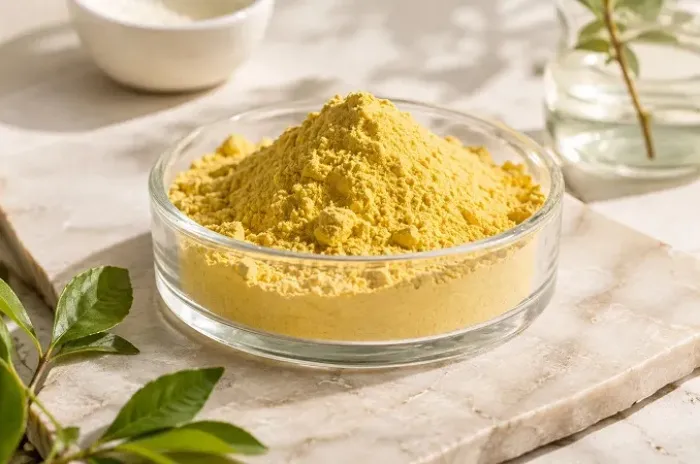
Liposomal CoQ10 powder
What Is Liposomal CoQ10 and How Does It Work?
CoQ10 is a molecule that your mitochondria use to make ATP. It is like a vitamin and loves fat. It is typically hard to swallow because of how it is made, but liposomal technology can fix that.
The Absorption Problem Behind Conventional CoQ10
Crystalline coenzyme Q10 has a large molecular weight and doesn't dissolve in water very easily. This means that unless taken with a fatty meal, most of a standard capsule doesn't get absorbed. In a crossover study that compared two ubiquinone softgels that were only different in whether the crystals were mixed or not, skipping the step of mixing the crystals decreased absorption by about 75%. What gets into the bloodstream is determined by dispersion state, not milligram count.
How Phospholipid Vesicles Carry CoQ10 Across the Gut?
A coenzyme Q10 liposome is a hollow sphere made of phospholipid bilayers, which are the same building blocks that make up cell membranes. CoQ10 sits in the lipid layer, the vesicle floats around in water, and the whole thing either mixes with cells in the intestines or rides into the lymphatic system. OriginBio's Liposomal CoQ10 50% uses this coating to improve absorption up to three to six times compared to other types. It also protects the active ingredient from breaking down in the digestive system.
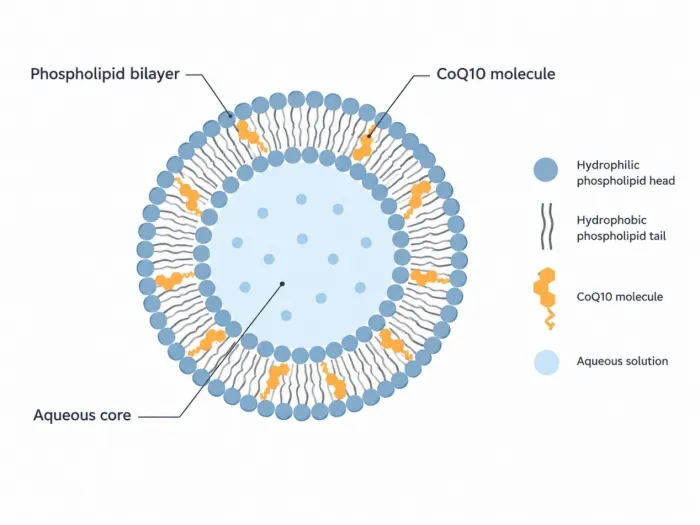
LCross-section diagram of a coenzyme Q10 liposome
What "50%" Means on a Liposomal CoQ10 Specification?
Liposomal CoQ10 50% means every gram contains at least 500 mg of CoQ10, with the balance made up of phospholipids, antioxidant and carrier. This loading is high for a liposomal ingredient, keeping capsule sizes small while preserving nano-scale vesicles. OriginBio's batches are verified by HPLC for content and by DLS/TEM for particle size, with a measured average diameter of 28.27 ± 3.64 nm.
What Is Ubiquinol? The Reduced "Active" Form of CoQ10 Explained
The "body-ready" form of ubiquinol is promoted. Knowing what that means helps you figure out how much of a price it's worth.
Ubiquinone and Ubiquinol: Two States of One Molecule
Inside cells, CoQ10 is always changing from ubiquinone (oxidized) to ubiquinol (reduced). Ubiquinone moves electrons around in the respiratory chain, and ubiquinol gives away electrons to fight free radicals. Biology-speaking, neither is "better"; the body needs both and can switch between them in a flash. Labels on supplements just freeze the molecule in one state when it is enclosed.
Why Ubiquinol Is Called the Active Antioxidant Form?
Ubiquinol is the only lipid-soluble antioxidant that our cells can make on their own, and it replaces vitamin E when it has been used to stop a radical. No matter what you eat, about 90% of the CoQ10 in your blood is ubiquinol. This is because gut cells and plasma enzymes break down ubiquinone before it gets into your bloodstream. CoQ10 mostly shows up in the blood as ubiquinol, even when it is eaten as ubiquinone. This shows that the body changes the coenzyme into its best form.
Where Ubiquinol Has Shown a Measurable Advantage?
Older groups have the best proof in favor of ubiquinol. In 2018, Zhang and his colleagues wrote in Food & Function that ubiquinol was better than ubiquinone at improving the levels of CoQ10 in older men. It was thought that making extra CoQ10 as ubiquinol would help older people and people who have problems absorbing nutrients because the lowering process might not work as well for them. The likely cause is a decrease in reductase activity that comes with getting older.
Delivery System vs. Redox Form: What the Clinical Data Say
It all comes down to this point. Pharmacokinetic experts compare formulas, while marketers compare chemicals. The second one makes the story more clear.
Head-to-Head Evidence on Ubiquinol vs Ubiquinone
The biggest crossover study with older people did not prove that ubiquinol was better. A syrup that dissolves in water was 2.4 times more bioavailable than regular capsules, according to Pravst and colleagues. However, the amount of ubiquinol that was bioavailable was only 1.7 times higher (p = 0.129). In younger people, López-Lluch et al. found that the cmax was much lower for the ubiquinol formulation (0.49 mg/L), while it was highest for the ubiquinone formulation (0.95 mg/L).
What Liposomal Encapsulation Adds in Human Trials?
Now, a strict plan for liposomal delivery has been tried. It was a randomized, double-blind, placebo-controlled crossover study where 18 people took either a placebo, 100 mg of unformulated CoQ10, or 100 mg of liposomal CoQ10. The liposomal product had much higher Cmax (+31.3%, p < 0.001) and AUC0-24 (+22.6%, p < 0.001) than CoQ10. There were no major changes in blood pressure, kidney function, liver tests, or cholesterol profile with either version.
Table 1: Comparison Table: Absorption Drivers Side by Side
Factor | Liposomal CoQ10 (ubiquinone) | Oil-Based Ubiquinol |
Primary absorption lever | Nano-vesicle dispersion, water miscibility | Reduced redox state, oil solubility |
Dependence on fatty meal | Low | Moderate to high |
Clinical evidence vs standard CoQ10 | +31% Cmax, +23% AUC (n = 18, 2025) | Mixed; significant in older men, non-significant in Pravst 2020 |
Plasma form after absorption | Mostly ubiquinol | Mostly ubiquinol |
Typical dose equivalence | Lower dose achieves similar exposure | Often dosed 1:1 with ubiquinone |
Stability Comparison: Why Ubiquinol Oxidizes and Liposomes Protect
Absorption numbers only matter if the molecule survives until the consumer opens the bottle. Here the two options diverge sharply.
The Oxidation Vulnerability of Ubiquinol
Ubiquinol carries two extra hydrogens that it readily surrenders to oxygen, light or heat. Exposed to air, a ubiquinol powder drifts back toward ubiquinone within hours, which is why ubiquinol softgels require opaque shells, nitrogen flushing and antioxidant co-formulation. Manufacturers absorb those costs, and any lapse in cold-chain or packaging integrity quietly converts the premium ingredient into the cheaper one.
How the Liposomal Bilayer Shields Ubiquinone?
Ubiquinone is already in its oxidized, thermodynamically stable state, so it has nowhere to "fall" chemically. Embedding it within phospholipid bilayers adds a second layer of defense: the lipid shell isolates CoQ10 from gastric acid, enzymes and ambient oxygen. In OriginBio's accelerated stability program (40°C/75% RH), assay, encapsulation efficiency and particle size remain within specification across six months, supporting a 24-month shelf life.
Table 2: Stability Metrics That Matter for Shelf-Life Claims
Parameter | Liposomal CoQ10 50% | Ubiquinol Raw Material |
Redox stability | High (oxidized form) | Low; reverts to ubiquinone |
Storage requirement | Cool, dry, below 25°C | Cool, dark, oxygen-excluded |
Packaging demand | Standard foil bag or drum | Nitrogen-flushed, light-proof |
Processing tolerance | Handles standard blending and encapsulation | Sensitive to heat and shear |
Typical shelf life | 24 months | 12–24 months with safeguards |
Matching Each Form to Age, Health Status and Use Case
The honest answer to "which is better" depends on who is swallowing the product and why. Segmenting the audience makes the decision straightforward.
Adults Under 60 and Active Consumers
Healthy adults convert ubiquinone to ubiquinol efficiently, so paying a redox premium buys little. A liposomal CoQ10 that disperses in water fits sports-nutrition drinks, energy stick packs and daily capsules, and it works without a fatty meal. The 2025 crossover trial saw a significant benefit of liposomal delivery for maximal concentrations and 24-hour area under the curve, with no differences in time to peak.
Older Adults, Statin Users and Malabsorption Cases
Evidence for ubiquinol is strongest here, yet it is not unanimous. Two large trials—Q-SYMBIO (average age 63) and KISEL-10 (average age 78)—show that older individuals can absorb and benefit from a properly formulated ubiquinone supplement. A pragmatic approach pairs liposomal ubiquinone for daily maintenance with ubiquinol for specific clinical positioning, or combines both in one formula.
Combining Both Forms in a Single Formulation
Nothing prevents a brand from blending liposomal CoQ10 with ubiquinol. The liposome supplies robust, meal-independent absorption and shelf stability; ubiquinol provides a marketing hook for the "active form" audience. Keep the ubiquinol fraction small to limit oxidation risk, and protect the finished product with opaque packaging. Dose on total CoQ10 and verify both forms by HPLC at release.
Liposomal CoQ10 vs Ubiquinol for Formulators: Cost, Dosage Forms and Sourcing Considerations
For supplement companies, ingredient choice is as much a manufacturing and margin decision as a scientific one.
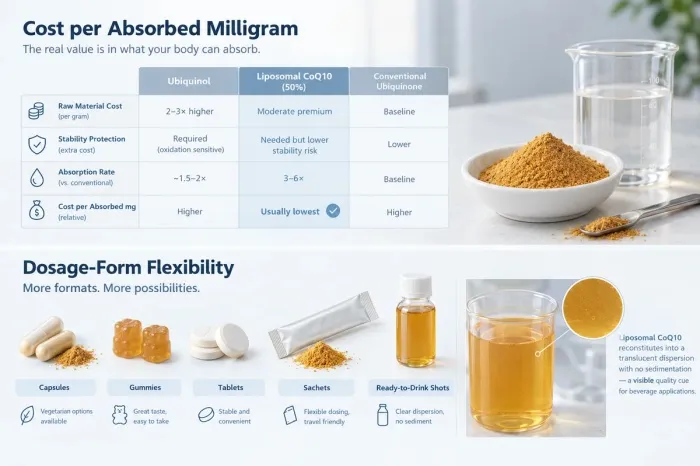
LLiposomal CoQ10 cost dosage form sourcing
Cost per Absorbed Milligram, Not per Label Milligram
Ubiquinol raw material typically costs two to three times more than ubiquinone, and stability safeguards add further expense. Liposomal CoQ10 50% carries a moderate premium over crystalline powder, yet the 3-6× absorption gain means a 100 mg liposomal dose can replace a larger conventional one. Run the arithmetic on absorbed milligrams and the liposomal option usually lands cheapest.
Dosage-Form Flexibility Across Capsules, Gummies and Liquids
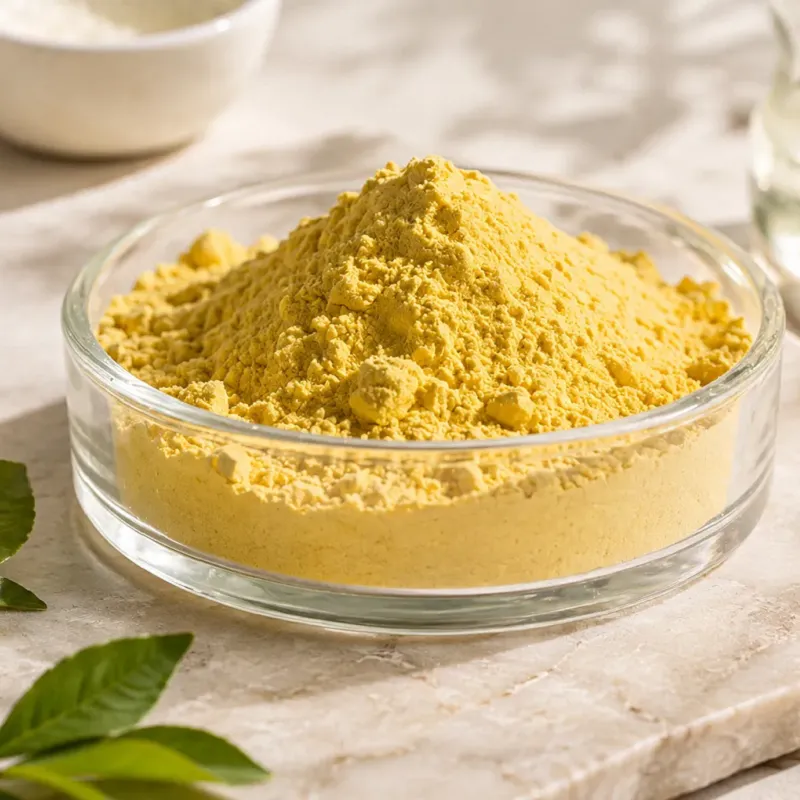
Ubiquinol is practically confined to softgels because of its oxidation sensitivity. A water-dispersible coenzyme Q10 liposome powder fits vegetarian capsules, tablets, sachets, gummies and ready-to-drink shots, opening formats where ubiquinol cannot compete. The orange-yellow powder reconstitutes into a translucent dispersion with no sedimentation, a visible quality cue in beverage applications.
Table 3: Sourcing Checklist: What to Ask a Liposomal CoQ10 Supplier
Question | Why It Matters |
Is particle size verified by DLS and TEM per batch? | Confirms true nano-liposomes rather than a coarse emulsion |
What is the encapsulation efficiency? | Free CoQ10 absorbs like crystalline powder |
Are COA, TDS, SDS and stability data available? | Required for supplier qualification and regulatory review |
Is the phospholipid non-GMO and allergen-controlled? | Supports clean-label and vegan claims |
Can the supplier handle finished-product manufacturing? | Shortens time to market and simplifies accountability |
Conclusion
Liposomal CoQ10 and ubiquinol are complementary tools rather than rivals. Ubiquinol offers a genuine edge for older adults and people with impaired conversion, but it is fragile, expensive and format-limited. Liposomal CoQ10 attacks the real bottleneck—dispersion and uptake—and delivers measurable absorption gains with the stability of ubiquinone. Since nearly all CoQ10 circulates as ubiquinol anyway, a well-engineered liposome often reaches the same destination by a sturdier road. For most consumer products, liposomal CoQ10 50% is the more versatile, economical and defensible choice; reserve ubiquinol for targeted clinical positioning.
Looking for a reliable liposomal CoQ10 manufacturer and bulk supplier? OriginBio, an ISO9001- and HACCP-certified factory with university R&D partnerships, supplies Liposomal CoQ10 50% with full COA, low MOQ and one-stop private-label manufacturing. Email sales@originbionutra.com for samples, specifications and a bulk quote.
FAQs
1. Is liposomal CoQ10 better absorbed than ubiquinol?
Available trials compare each against standard CoQ10 rather than each other. Liposomal CoQ10 showed +31% Cmax and +23% AUC in a 2025 crossover study, while ubiquinol results range from significant in older men to non-significant in elderly cohorts.
2. Does liposomal CoQ10 50% need to be taken with food?
No. The phospholipid vesicles disperse in water and are absorbed without relying on dietary fat, which is one reason liposomal powders suit stick packs, beverages and morning capsule routines where fatty meals are absent.
3. Can I combine liposomal CoQ10 and ubiquinol in one product?
Yes. Many formulators pair liposomal ubiquinone for stable, meal-independent absorption with a smaller ubiquinol fraction for "active form" positioning. Protect the blend from light and oxygen, and verify both forms by HPLC at release.
References
1. Pravst I, Rodríguez Aguilera JC, Cortes Rodriguez AB, Jazbar J, Locatelli I, Hristov H, Žmitek K. Comparative Bioavailability of Different Coenzyme Q10 Formulations in Healthy Elderly Individuals. Nutrients. 2020;12(3):784.
2. López-Lluch G, del Pozo-Cruz J, Sánchez-Cuesta A, Cortés-Rodríguez AB, Navas P. Bioavailability of coenzyme Q10 supplements depends on carrier lipids and solubilization. Nutrition. 2019;57:133-140.
3. Zhang Y, Liu J, Chen XQ, Oliver Chen CY. Ubiquinol is superior to ubiquinone to enhance Coenzyme Q10 status in older men. Food & Function. 2018;9(11):5653-5659.
4. Mantle D, Dybring A. Bioavailability of Coenzyme Q10: An Overview of the Absorption Process and Subsequent Metabolism. Antioxidants. 2020;9(5):386.
OriginBio
A reliable one stop nutrition supplement contract manufacturing partner
 EN
EN
 fr
fr  de
de  ru
ru 








 Call us on:
  Email Us:
  Office Add: