For supplement brands, OEM/ODM manufacturers, and functional beverage companies, selecting a liposomal milk thistle supplier involves more than comparing price and stated silymarin content. Buyers need to evaluate analytical methods, liposomal characterization, quality documentation, formulation compatibility, and supply terms before approving an ingredient for production.
This guide outlines six practical areas for supplier evaluation, followed by common warning signs, a supplier assessment checklist, and questions to ask before requesting a quote. The goal is to help procurement, quality, and formulation teams assess whether a supplier's specifications and supporting evidence meet their product requirements.
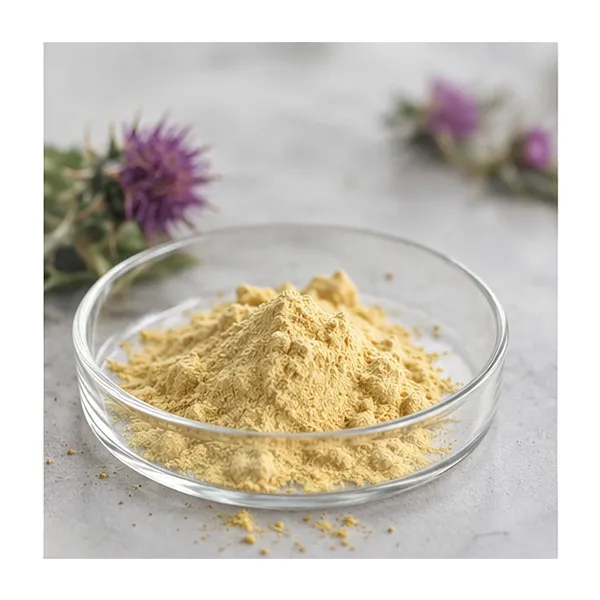
Verify Silymarin Content, HPLC Assay Method, and Batch-to-Batch Consistency
Silymarin content is a key specification when evaluating a liposomal milk thistle ingredient. However, the stated percentage should be reviewed alongside the analytical method, reference standard, and assay basis used to determine it.
Buyers should request the relevant HPLC test report or chromatogram, clarify how total silymarin is calculated, and review silybin content separately where it is part of the purchase specification. Data from multiple production batches can help buyers assess consistency over time. The method and reporting basis should remain comparable across the batches being evaluated.
Potential warning signs include an assay claim without a clearly identified method, missing batch-specific results, or inconsistent reporting of silymarin and silybin content. Buyers should clarify these issues before approving the ingredient specification.
OriginBio supplies liposomal silymarin powder with a stated specification of 35%-40% silymarin, measured by HPLC. Buyers can request the applicable product specification and batch-specific analytical documentation to review the assay methods and reported results.
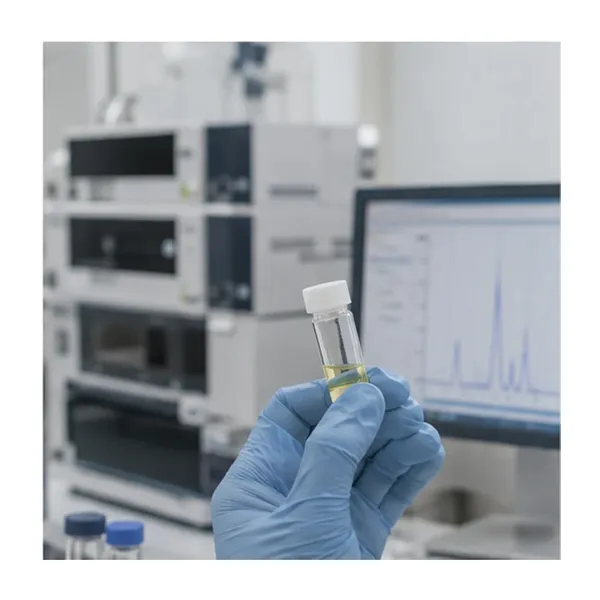
Confirm Real Liposomal Quality: Encapsulation Efficiency, Particle Size, PDI, and DLS Data
Liposomal characterization should be assessed using methods appropriate to the product and its intended application. Buyers can request encapsulation efficiency data, particle size distribution, PDI results, and the relevant test methods or reports.
Dynamic Light Scattering (DLS) is commonly used to characterize particle size and distribution in dispersed systems. However, DLS results should be interpreted alongside other relevant characterization evidence rather than treated as standalone proof of liposomal structure or encapsulation.
When comparing suppliers, review the reported results, test conditions, analytical methods, and specification limits. Confirm that the data relate to the specific ingredient being purchased and that the supplier can explain how the results are used for quality control.
Red flags include suppliers who use the term "liposomal" without being able to define or test encapsulation efficiency, who cannot provide PDI data, or who provide particle size ranges that seem inconsistent or unverifiable.
OriginBio operates on a proprietary liposomal platform with particle sizes controlled within a 50-200 nm range. Our testing infrastructure includes DLS, HPLC, UV, and ICP-MS, allowing us to generate and share encapsulation efficiency, particle size, and PDI data for each batch — giving formulation and R&D teams the technical basis they need before scaling production.
Review COA, TDS, SDS, Heavy Metals, Microbiology, and Stability Data Before Purchasing
Before purchasing a liposomal milk thistle ingredient, buyers should request the documents relevant to the product specification and target market. These may include a batch-specific Certificate of Analysis (COA), Technical Data Sheet (TDS), Safety Data Sheet (SDS), heavy metal results, microbiological results, and available stability data.
Stability information should identify the tested product, packaging, storage conditions, test intervals, and measured quality attributes. Depending on the formulation, relevant measures may include silymarin content, particle size distribution, encapsulation efficiency, appearance, and other product-specific parameters. Buyers should confirm that the available data support the proposed storage conditions and shelf-life claims.
Potential warning signs include missing batch-specific COAs, unclear analytical methods, unavailable test results for agreed quality requirements, or stability claims that are not supported by relevant data. Buyers should clarify documentation gaps before approving a supplier.
OriginBio maintains full documentation packages including COA, TDS, SDS, HPLC chromatograms, stability data, and allergen statements for every batch. Our testing capabilities span HPLC, UV, DLS, ICP-MS, and microbiological analysis, supported by third-party testing where required — giving procurement and quality teams the paper trail needed for internal QA and regulatory review.
Check cGMP, ISO, Kosher, Halal, Non-GMO Certifications, and Phospholipid Source
Certifications and quality-system documentation can help buyers assess a supplier's manufacturing and quality-management practices. However, each certificate should be checked for its issuing body, validity period, scope, and relationship to the actual production facility.
Buyers should also confirm the phospholipid source used in the liposomal matrix and request relevant allergen and sourcing documentation. Soy-derived and sunflower-derived lecithin may have different implications for ingredient declarations and customer requirements, so the source should be verified rather than inferred from the product format.
Certifications and supplier documents should be reviewed alongside the requirements applicable to the finished product and its target market. A supplier's certification status alone does not establish that every finished product or label claim complies with all applicable regulations.
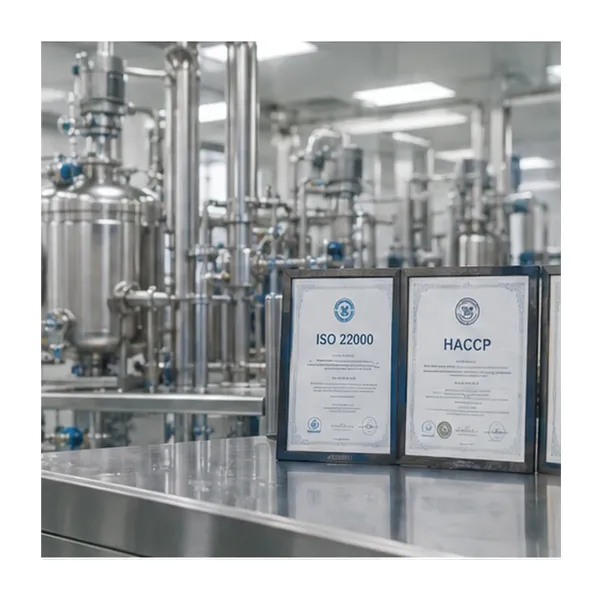
OriginBio's facility holds cGMP, ISO 9001, ISO 22000, FSSC 22000, HACCP, Non-GMO, Vegan, Kosher, and Halal certifications. Our liposomal matrix uses non-GMO sunflower lecithin as the phospholipid source, supporting allergen-conscious and vegan formulation claims, and we provide full regulatory documentation to support import compliance into the United States and Europe.
Assess Formulation Fit for Capsules, Stick Packs, Powders, and RTD Beverages
Liposomal ingredients behave differently across delivery formats, and a supplier's technical support capability often determines how smoothly your product moves from formulation to commercial production. A powder optimized for capsule filling may require different flow and particle characteristics than one intended for liposomal milk thistle powder for RTD beverages, where dispersibility and clarity in liquid matrices are critical.
Buyers should request flowability and bulk density data for capsule and powder applications, dispersion and solubility data for beverage and stick pack formats, and information on compatibility with common excipients, sweeteners, and acidulants used in gummies and functional drinks.
Red flags include suppliers who offer only one generic powder format with no format-specific guidance, who cannot advise on dispersion behavior in aqueous systems, or who have no documented experience supporting multiple finished-product categories.
OriginBio supports formulation across liposomal milk thistle powder for capsules, powders, stick packs, gummies, liver support formulas, and detox shots. Our team provides technical guidance on dispersion behavior, compatibility, and custom carrier adjustments, helping brand owners and contract manufacturers move efficiently from concept to finished product.
Compare MOQ, Sample Policy, Lead Time, Pricing, and Long-Term Supply Capability
Commercial terms should be assessed alongside technical suitability. Before placing an order, buyers should confirm sample availability, pilot and commercial MOQs, standard and customized lead times, packaging options, and arrangements for repeat orders. These details help procurement teams assess whether the supplier can support the intended production schedule and purchasing volume.
Red flags include suppliers unwilling to provide samples before large orders, those with no clear pilot-to-commercial MOQ pathway, unusually long or vague lead times, or an inability to describe how they manage raw material continuity for repeat orders.
As a bulk liposomal milk thistle extract supplier and OEM/ODM liposomal milk thistle supplier, OriginBio offers samples in 200 g sizes, with MOQs starting at 1 kg for pilot orders and 25 kg for commercial orders. Standard lead time is 7–15 days for in-stock product, with customized lead times available for tailored formulations. Packaging options include 1 kg aluminum foil bags and 25 kg drums, with custom packaging available on request. We also support custom silymarin content, custom phospholipid sourcing, and private-label programs for long-term partners.
Red Flags to Avoid When Selecting a Supplier
When evaluating any liposomal milk thistle supplier, watch for these warning signs:
1. Unclear assay results: Silymarin claims are not supported by a defined analytical method or relevant batch-specific results.
2. Insufficient liposomal characterization: The supplier cannot explain the methods used to assess encapsulation efficiency, particle size, or other agreed quality attributes.
3. Incomplete quality documentation: Required COAs, safety testing results, or relevant stability information are unavailable or inconsistent.
4. Unverifiable certifications or sourcing claims: The supplier cannot confirm the production facility, certificate scope, or phospholipid source.
5. Unclear commercial commitments: Sample policies, MOQs, lead times, or repeat-order arrangements cannot be confirmed in writing.
Liposomal Milk Thistle Supplier Evaluation Checklist
Evaluation Area | Documents / Data to Request | What a Reliable Supplier Should Provide |
Silymarin assay | HPLC chromatograms, method reference, silybin spec | Batch-specific HPLC data, consistent specification across lots |
Liposomal characterization | Encapsulation efficiency, particle size, PDI, DLS reports | Verified DLS data, defined particle size range (e.g., 50–200 nm) |
COA and safety testing | COA, heavy metals (ICP-MS), microbiology reports | Batch-specific COA, documented heavy metal and micro testing |
Stability and shelf life | Stability study data, storage condition guidelines | Real-time or accelerated stability data supporting shelf life |
Certifications and compliance | cGMP, ISO 9001/22000, FSSC 22000, HACCP, Kosher, Halal | Verifiable certificates tied to actual manufacturing facility |
Phospholipid source and allergen status | Phospholipid origin, allergen statement, Non-GMO status | Clearly identified source (e.g., non-GMO sunflower lecithin) |
Formulation support | Format-specific technical data, dispersion/solubility info | Guidance across capsules, powders, stick packs, RTD, gummies |
MOQ, lead time, and supply capability | Sample policy, MOQ tiers, lead time, packaging options | Transparent terms with scalable pilot-to-commercial pathway |
Questions to Ask Before Requesting a Quote
1. What is the silymarin assay method, and what batch-specific results are available?
2. Which liposomal characterization data can you provide for the product, and how are the measurements performed?
3. Can you provide the applicable COA, TDS, SDS, safety testing results, and stability information?
4. Which certifications and phospholipid sourcing documents are available for the actual product and manufacturing facility?
5. What sample options, MOQs, lead times, and packaging formats apply to the requested specification?
6. What formulation guidance and quality documentation are available for the intended application?
Ask the supplier to clarify any specification or documentation gaps before confirming the purchase requirements.
Conclusion
Choosing a liposomal milk thistle supplier requires more than comparing stated silymarin content or quoted price. Buyers should review the analytical methods, liposomal characterization data, quality documentation, relevant stability information, formulation requirements, and commercial terms before approving an ingredient for production.
OriginBio offers HPLC-tested silymarin content, proprietary liposomal technology with documented particle size and encapsulation data, full certification and regulatory support, and flexible MOQ and sample options for brands and manufacturers at every scale.
Evaluate OriginBio Liposomal Milk Thistle Extract Powder
If you are sourcing liposomal milk thistle extract powder for a supplement or functional product, contact OriginBio at sales@originbionutra.com to discuss your target specifications, intended application, and purchasing requirements.
OriginBio
A reliable one stop nutrition supplement contract manufacturing partner
 EN
 fr
 de
 ru











 Call us on:
 Email Us:
 Office Add:
