ORIGINBIO | FUNCTIONAL INGREDIENT INNOVATION |
MICROENCAPSULATION
IN FUNCTIONAL NUTRITION
Microencapsulation is moving beyond basic ingredient protection. Today, it is increasingly used to improve processing stability, control release, mask difficult sensory notes and convert challenging actives into commercially practical formats. |
Why Microencapsulation Matters |
Ingredient selection is only the beginning; finished-product performance depends on how an active is protected, processed and delivered.
Microencapsulation has become an important formulation platform in functional foods, beverages and dietary supplements. Sensitive nutrients may degrade when exposed to oxygen, light, heat, moisture or unsuitable pH conditions. Oils may oxidize or separate, minerals may create metallic notes, botanical extracts may taste bitter, and hygroscopic ingredients may cake during storage.
A suitable encapsulation system can address these challenges by surrounding the active material with a protective wall or embedding it within a carrier matrix. The resulting particles are easier to handle, more compatible with dry-blend systems and better suited to consumer-friendly formats.
01 Protect the Active Limit exposure to oxygen, light, moisture, heat and selected processing conditions. | 02 Improve Sensory Quality Reduce fishy, bitter, metallic or irritating notes that can affect consumer acceptance. |
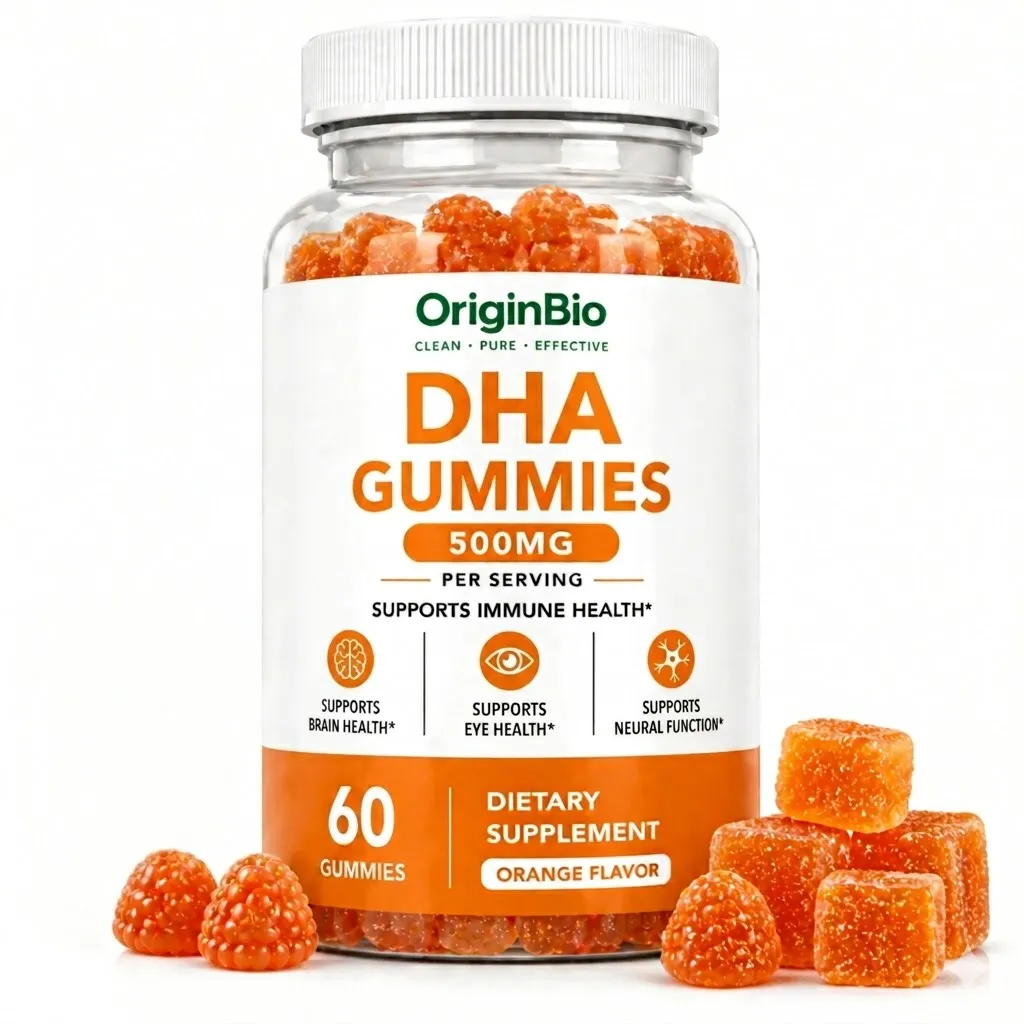
03 Control Ingredient Interactions Separate incompatible components and reduce unwanted reactions inside complex formulas. | 04 Expand Format Flexibility Improve flowability, dispersibility and compatibility with powders, capsules, tablets, gummies and beverages. |
What Is Microencapsulation? |
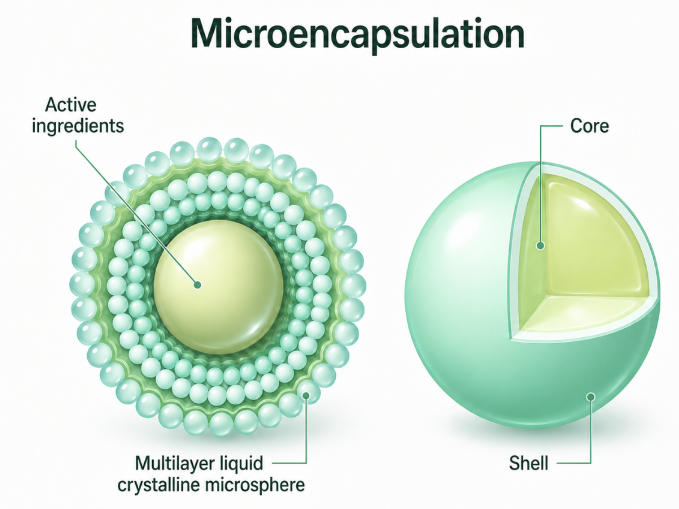
A core material is enclosed by a wall material or distributed within a protective matrix.
Microencapsulation is a process in which a solid, liquid or gaseous core material is enclosed by a food-grade wall material or incorporated into a carrier matrix. Finished particle size varies by technology and application; many food and nutrition systems fall within the micrometer range, commonly around 1–250 μm.
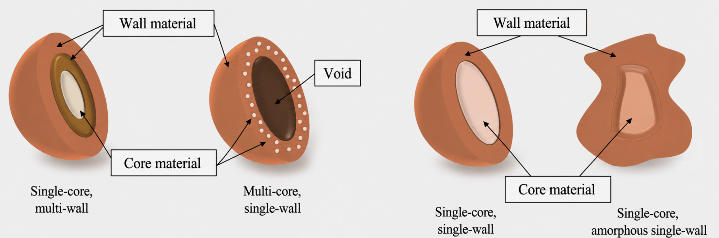
The architecture may be single-core, multi-core, irregular core-shell or matrix-type. The correct structure depends on the active ingredient, desired loading, release profile, processing conditions and final dosage form.
Representative microparticle structure and electron micrographs showing particle morphology and internal architecture.
The wall system determines protection, dispersibility, release and label positioning.
Wall materials should be selected according to their rheology, emulsification capacity, film-forming performance, chemical compatibility and ability to retain the active ingredient during processing and storage. Common options include:
· Carbohydrates: starch, maltodextrin, modified starch and cyclodextrins.
· Gums and hydrocolloids: gum arabic, agar and carrageenan.
· Proteins: caseinates, gelatin and selected plant proteins.
Label requirements also matter. Vegan, allergen-free, clean-label or dairy-based positioning can affect the choice of carrier. No single wall system is optimal for every ingredient; the design must balance loading efficiency, stability, cost, sensory impact and processing performance.
Microencapsulation is particularly useful for unstable, oily, poorly dispersible or strongly flavored actives.
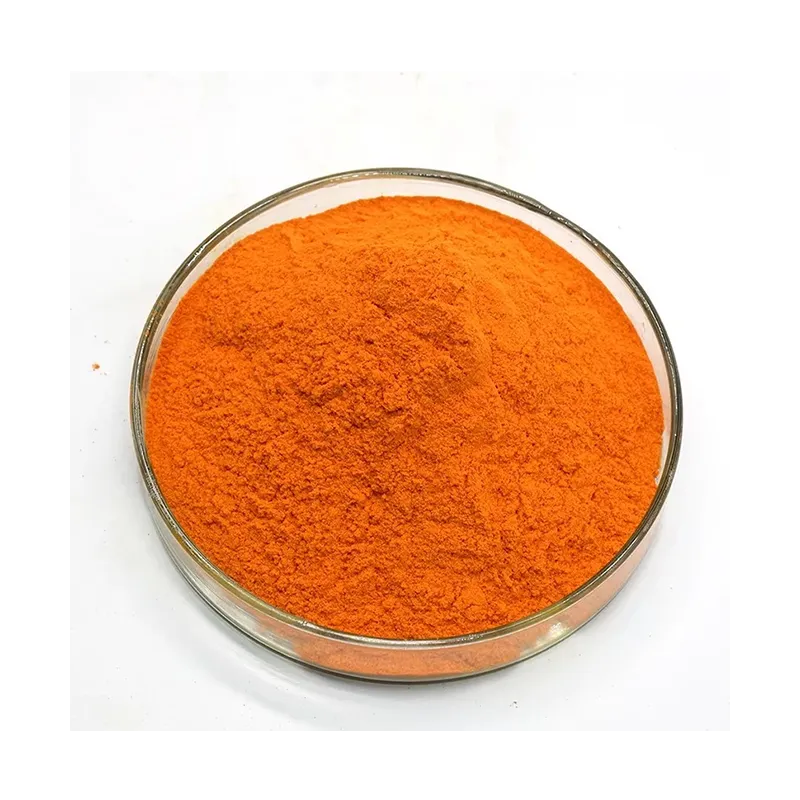
Functional Oil Powders DHA algal oil, MCT oil, flaxseed oil, pumpkin seed oil and other liquid lipids. | Omega-3 Ingredients Fish oil, algal DHA and other polyunsaturated fatty acids requiring oxidation control. |
Carotenoids Beta-carotene, lutein, zeaxanthin and astaxanthin. | Vitamins & Minerals Selected vitamins A, C, D and E, as well as minerals requiring taste or interaction control. |
Probiotics Protective carrier systems designed around strain stability and processing tolerance. | Sports Nutrition Actives Hygroscopic, poorly soluble or sensory-challenging ingredients such as L-carnitine, beta-alanine and BCAAs. |
Functional oil powders are produced by emulsifying liquid oils with selected wall materials, followed by processes such as high-pressure homogenization, spray drying and agglomeration. The objective is to convert an oxidation-sensitive liquid into a free-flowing powder with controlled surface oil, stable loading and application-ready dispersibility.
Functional Oil Microcapsules: What Good Performance Looks Like |
High oil loading alone is not enough; surface oil, oxidation stability and sensory quality must also be controlled.
Depending on the oil and wall system, oil loading may reach approximately 50–70%. However, the usable value of a product depends on more than total oil content. Low surface oil is essential because unencapsulated oil at the particle surface is more exposed to oxygen, can reduce flowability and may create off-notes during storage.
A well-designed microencapsulated oil powder should balance:
· High active loading with low surface oil.
· Good oxidation resistance, supported by acid value and peroxide value controls.
· Cold-water dispersibility without excessive sedimentation or floating oil.
· Neutral or improved taste and mouthfeel.
· Stable flowability with reduced caking risk.
Microencapsulation may also improve digestive bioaccessibility for selected lipid-soluble ingredients by creating smaller dispersed oil droplets and protecting the active until release. The effect depends on the specific formulation and should be supported by appropriate testing rather than assumed from the delivery format alone.
Production and Finished-Product Verification |
A robust process combines emulsion control, drying, finishing and analytical confirmation.
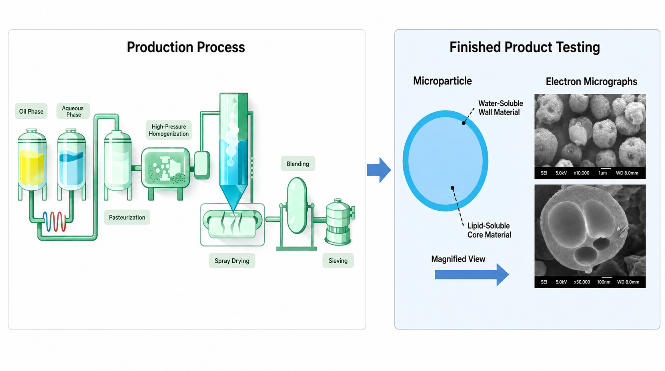
Representative process: oil and aqueous phase preparation, pasteurization, high-pressure homogenization, spray drying, blending, sieving and finished-particle testing.
Critical process parameters include emulsion stability, homogenization pressure, inlet and outlet temperatures, feed rate, wall-material ratio, particle-size distribution and moisture control. Finished-product microscopy can be used to assess particle morphology, shell integrity and internal structure.
Three Practical Formulation Solutions |
1. Moisture-Resistant L-Carnitine Granules
L-carnitine is widely used in sports nutrition but is highly hygroscopic, which can cause clumping and create processing difficulties. A uniform protective coating can reduce direct exposure to environmental moisture and improve handling during storage and manufacturing.
30 min. | 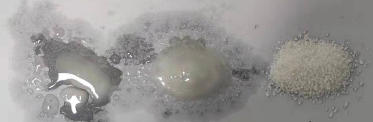
72h |
2. Sustained-Release Beta-Alanine Granules
Beta-alanine is a rate-limiting precursor in carnosine synthesis and is widely used in sports nutrition. Rapid intake can produce a temporary tingling sensation known as paraesthesia. A controlled-release coating can slow the dissolution profile, smooth the release rate and improve the user experience.
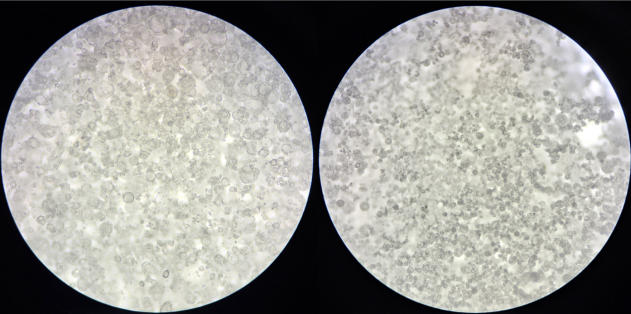
Microscopic comparison of Rraw powder (Left) and Sustained-release granules (Right)
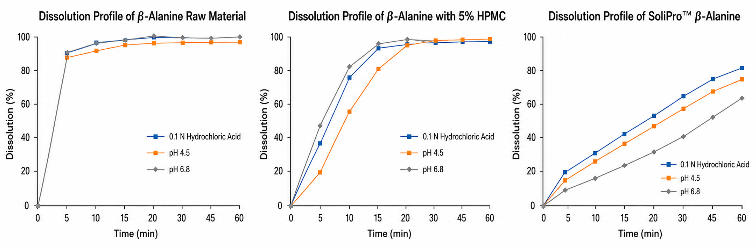
Comparative Dissolution Testing
The dissolution profile shown above demonstrates a gradual release pattern over 60 minutes for the sustained-release system, compared with rapid dissolution of the untreated raw material. In-vitro results should be interpreted together with formulation specifications and intended use conditions.
3. Instant-Dispersing BCAA Powder
Branched-chain amino acids are popular in sports nutrition but can be difficult to disperse and may have a challenging taste profile. Multi-layer surface modification can increase hydrophilic surface characteristics, helping the powder wet and disperse more efficiently in water.

Comparative water-dispersion demonstration for a standard powder and an instant-dispersing powder system.
Quality Control Priorities |
Reliable encapsulation requires more than a good particle image.
Microbiological Safety Control total plate count, yeast, mold, coliforms and relevant pathogens according to product and market requirements. | Moisture & Flowability Manage residual moisture to reduce caking and support storage stability. |
Oil Loading & Surface Oil Verify total fat or active loading while minimizing unencapsulated surface oil. | Oxidation Indicators Monitor acid value, peroxide value and other relevant stability parameters. |
Dispersibility Assess wetting, sedimentation, floating oil and cold-water behavior in the intended application. | Traceability Maintain batch records from raw-material receipt through production, testing, release and shipment. |
OriginBio supports documentation and quality management aligned with applicable GMP, ISO 22000 and HACCP systems. Product specifications should be tailored to the ingredient, dosage form, destination market and intended shelf life.
How Brands Should Select a Microencapsulation System |
Start with the formulation problem, not the technology label.
Before choosing an encapsulated ingredient, product developers and procurement teams should clarify the performance target and request evidence relevant to the finished product.
· What is the core ingredient and target active loading?
· Which wall materials are used, and do they meet allergen, vegan and labeling requirements?
· What are the total oil and surface oil specifications?
· Which processing stresses must the particle tolerate?
· Is the objective oxidation protection, taste masking, moisture resistance, controlled release or dispersibility?
· What particle size, bulk density and flowability are required for the final format?
· Which stability, dissolution or application tests are available?
From Ingredient Protection to Commercial Product Performance |
Microencapsulation creates value when it solves a measurable formulation challenge.
The most successful encapsulation projects do more than protect an ingredient. They improve the complete product system: raw-material stability, processing efficiency, sensory quality, dosage-form compatibility and consumer experience.
OriginBio develops microencapsulated ingredient and finished-product solutions across functional oils, carotenoids, vitamins, probiotics and sports-nutrition actives. Support can include carrier selection, formulation assessment, pilot testing, stability evaluation, dosage-form development and commercial production.
Discuss Your Formulation Challenge Is your priority stability, taste masking, moisture resistance, controlled release or format flexibility? A technically effective solution begins with defining the problem clearly. |
FAQ
What is the difference between microencapsulation and liposomal delivery?
Microencapsulation generally uses a protective wall or matrix to create solid particles, while liposomal systems use phospholipid bilayers to carry selected water- and fat-compatible actives. The correct platform depends on the ingredient and application.
Can microencapsulation improve bioavailability?
It may improve bioaccessibility for selected ingredients by protecting the active, improving dispersion or controlling release. Any bioavailability claim should be supported by formulation-specific evidence.
What does “surface oil” mean?
Surface oil is the portion of oil that remains unencapsulated or exposed on the outside of the particle. Lower surface oil generally supports better oxidation stability and flowability.
Which finished-product formats can use microencapsulated ingredients?
Common formats include beverage powders, sachets, stick packs, capsules, tablets, gummies, premixes, bakery products and selected liquid systems.
OriginBio
A reliable one stop nutrition supplement contract manufacturing partner
 EN
EN
 fr
fr  de
de  ru
ru 








 Call us on:
  Email Us:
  Office Add: