Types of Collagen: Type I vs Type II vs Type III – Benefits & Applications
Collagen is the most abundant structural protein in the human body, accounting for nearly 30% of total protein content. Among over 28 types of collagen identified, Type I, Type II, and Type III collagen are the most important and widely used in nutraceutical and medical industries.
Understanding the differences between these three collagen types helps manufacturers, brands, and buyers choose the right ingredients for specific applications such as skin care, joint health, and tissue repair.
What is Type I Collagen?
Type I collagen makes up about 80–90% of the total collagen in the human body. It is mainly found in:
· Skin dermis
· Bones
· Tendons and ligaments
· Blood vessels
Structure Characteristics
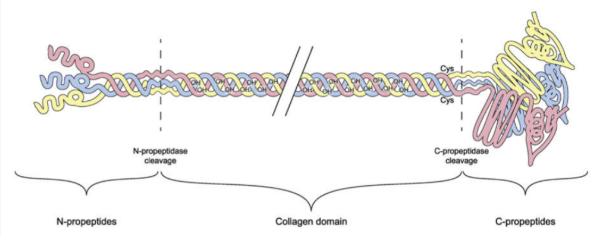
Type I collagen consists of two α1 chains and one α2 chain, forming a strong triple helix structure. It easily forms thick, dense fibers, providing high tensile strength.
Key Benefits
· Improves skin elasticity and reduces wrinkles
· Supports bone density and strength
· Enhances tendon repair and recovery
Applications
· Anti-aging supplements
· Beauty and skin health products
· Medical dressings and wound healing materials
What is Type II Collagen?
Type II collagen is mainly found in cartilage and joint tissues, especially in:
· Articular cartilage
· Intervertebral discs
· Eye vitreous
Structure Characteristics
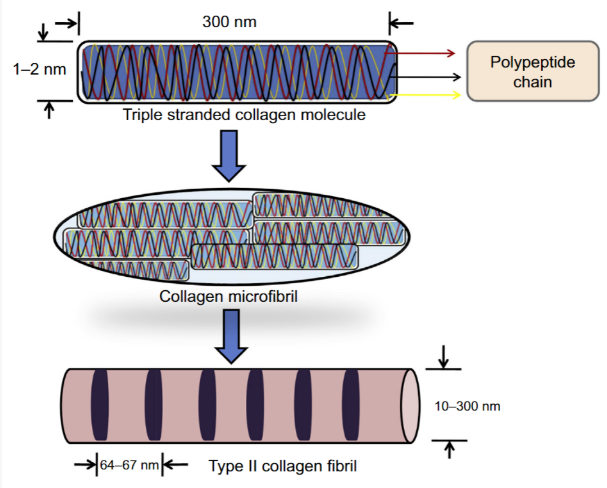
It consists of three identical α1 chains, forming a looser network structure. It also has binding sites for glycosaminoglycans such as hyaluronic acid.
Key Benefits
· Maintains cartilage elasticity and durability
· Reduces joint friction and wear
· Supports cartilage regeneration
· Helps reduce inflammation
Applications
· Joint health supplements
· Osteoarthritis support products
·Sports nutrition formulations
What is Type III Collagen?
Type III collagen is commonly found in:
· Infant skin
· Blood vessels
· Gastrointestinal tissues
Structure Characteristics
It forms thin and flexible fibers, with a diameter about 1/3–1/2 of Type I collagen, making it more elastic.
Key Benefits
· Promotes early-stage wound healing
· Supports blood vessel flexibility
· Works synergistically with Type I collagen for skin firmness
Applications
· Medical wound dressings
· Skincare products (serums, masks)
Tissue repair formulations
Type I vs Type II vs Type III Collagen: Key Differences
| Feature | Type I | Type II | Type III |
| Main Location | Skin, bone | Cartilage | Skin, vessels |
| Structure | Dense fibers | Loose network | Thin elastic fibers |
| Function | Strength | Flexibility | Elasticity |
| Application | Beauty, bone | Joint health | Repair & skin |
How to Choose the Right Collagen Type?
· For skin & anti-aging → Type I & Type III
· For joint health → Type II
· For medical or tissue repair → Combination of Type I & III
For supplement brands and manufacturers, selecting the right collagen type depends on product positioning and target market demand.
Collagen Solutions for Your Brand
At OriginBionutra, we provide high-quality collagen ingredients for:
· Private label supplements
· OEM/ODM manufacturing
· Custom formulation
Contact us to develop your collagen-based products tailored to your market.
OriginBio
A reliable one stop nutrition supplement contract manufacturing partner
 EN
EN
 fr
fr  de
de  ru
ru 











 Call us on:
  Email Us:
  Office Add: